

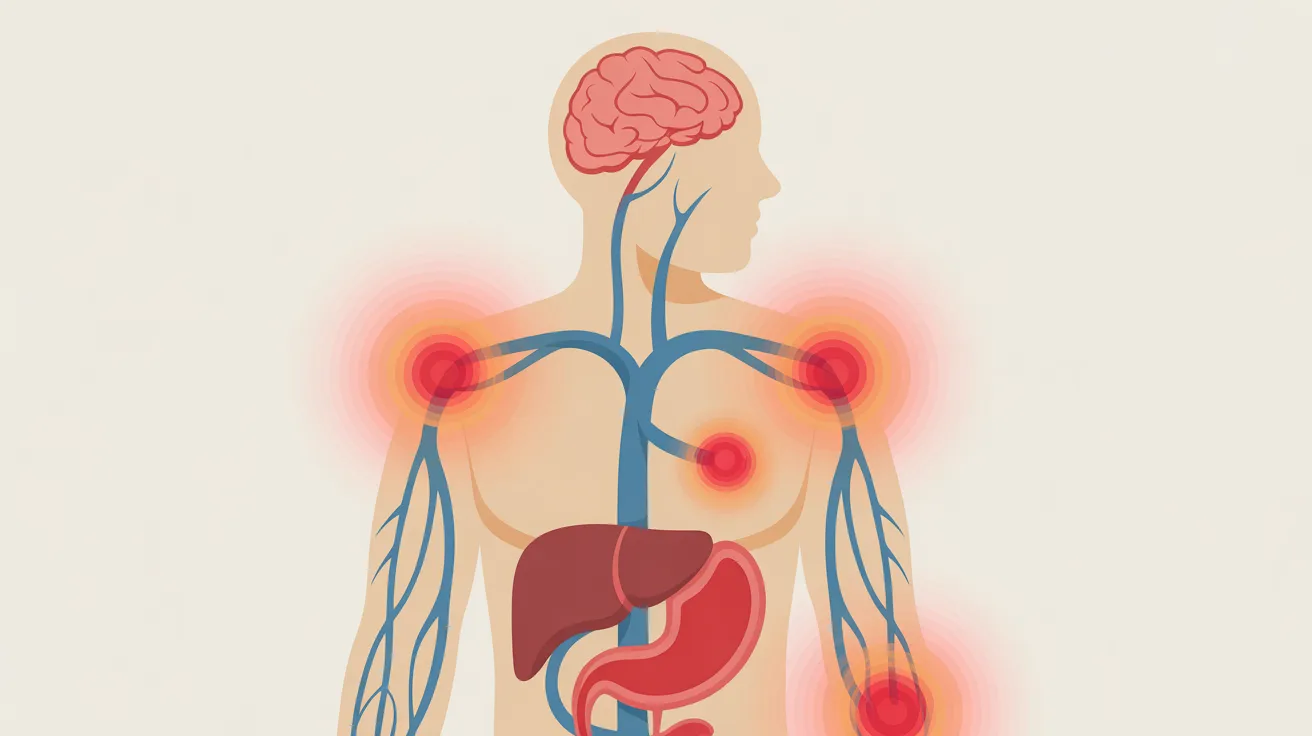
An aneurysm can be one of the most confusing and frightening medical conditions—not only because of what it can do, but because of how quietly it may exist. Many people imagine an aneurysm as something that always causes dramatic pain or obvious warning signs. In reality, aneurysms often feel subtle, vague, or even like nothing at all—until they don’t.
Understanding what an aneurysm feels like, when symptoms appear, and how those sensations differ depending on the location of the aneurysm can help you recognize warning signs early and seek timely care.
This guide walks you through the sensations, symptoms, and lived experiences associated with aneurysms, using clear language, gentle explanations, and practical tips—much like a trusted guide helping you notice when something just isn’t right.
What Is an Aneurysm?
An aneurysm is a weakened, bulging area in the wall of a blood vessel. Over time, pressure from flowing blood can cause that weakened spot to balloon outward.
Think of it like:
- A thin patch on a garden hose
- A bubble forming on an old bicycle tire
- A worn seam slowly stretching under pressure
Aneurysms can develop slowly and silently, or they can grow and rupture suddenly, which is a medical emergency.
Why Understanding “What It Feels Like” Matters
Unlike many illnesses, aneurysms:
- Often don’t cause symptoms early
- Can mimic common, harmless aches
- May only be noticed when they press on nearby tissues
- Become dangerous if they rupture
Recognizing early or subtle sensations may:
- Lead to earlier diagnosis
- Prevent rupture
- Save lives
Can You Feel an Aneurysm?
The Short Answer
Sometimes yes. Often no.
Many aneurysms cause no noticeable symptoms, especially when they are small and stable. Others create sensations that are easy to dismiss as stress, muscle pain, or indigestion.
Whether you feel an aneurysm depends on:
- Its size
- Its location
- Whether it is growing, leaking, or rupturing
- Pressure on nearby nerves or organs
What an Aneurysm Typically Feels Like (General Sensations)
People who do feel an aneurysm often describe sensations such as:
- A deep, persistent ache
- A pulsing or throbbing feeling
- Pressure rather than sharp pain
- Pain that doesn’t improve with rest
- Discomfort that slowly worsens
These sensations are often dull, strange, or unfamiliar, not sharp or dramatic at first.
What Does a Brain Aneurysm Feel Like?
Brain (cerebral) aneurysms are among the most feared—and also the most misunderstood.
Unruptured Brain Aneurysm Symptoms
Many unruptured brain aneurysms cause no symptoms at all. When they do, people may notice:
- Dull or localized headaches
- Pain behind or above one eye
- Vision changes (blurry or double vision)
- Drooping eyelid
- Facial numbness or tingling
- Difficulty concentrating
- A vague sense that “something feels off”
Visual cue:
Pain may feel deep inside the skull, not like a surface headache.
Ruptured Brain Aneurysm: What It Feels Like
This is a medical emergency.
People often describe:
- “The worst headache of my life”
- Sudden, explosive head pain
- A sensation like being hit in the head
- Neck stiffness
- Nausea and vomiting
- Sensitivity to light
- Loss of consciousness
- Confusion or seizures
This pain is:
- Sudden
- Severe
- Unlike any headache before
🚨 Call emergency services immediately if this occurs.
What Does an Abdominal Aortic Aneurysm Feel Like?
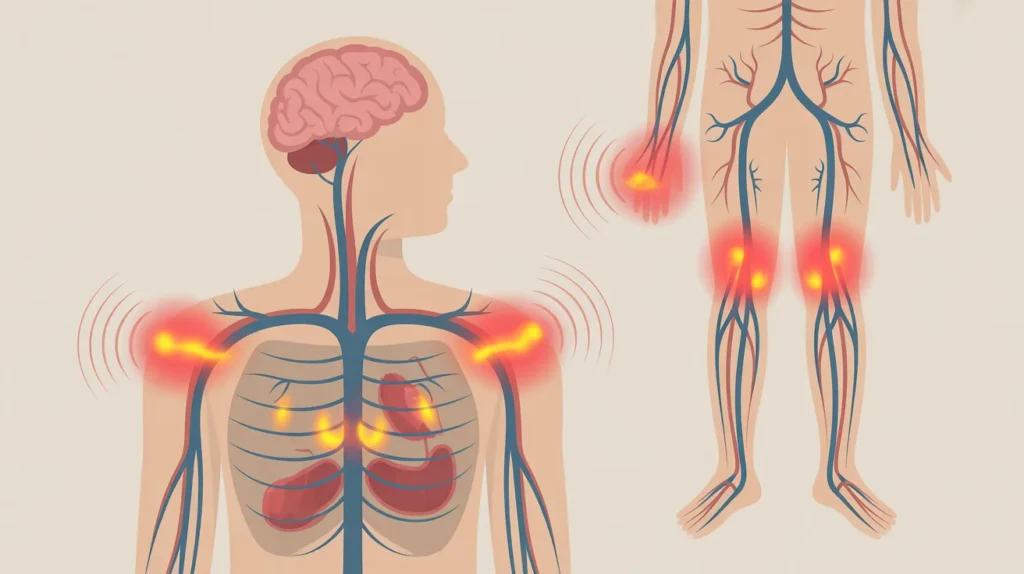
An abdominal aortic aneurysm (AAA) develops in the large artery that runs through the abdomen.
Common Sensations
Many AAAs are silent. When symptoms occur, they may include:
- A deep, steady abdominal ache
- Pain in the lower back or side
- A pulsing sensation near the belly button
- Pain that radiates to the groin or legs
Visual cue:
Some people can feel a heartbeat-like pulse in their abdomen when lying flat.
Ruptured Abdominal Aneurysm
This is life-threatening and feels dramatic:
- Sudden, severe abdominal or back pain
- Pain described as tearing or ripping
- Dizziness or fainting
- Rapid heartbeat
- Cold, clammy skin
- Drop in blood pressure
🚨 Immediate emergency care is essential.
What Does a Thoracic Aneurysm Feel Like?
Thoracic aneurysms occur in the chest area.
Possible sensations include:
- Chest pain
- Upper back pain
- Hoarseness
- Coughing
- Difficulty breathing
- Difficulty swallowing
These symptoms happen when the aneurysm presses on nearby organs like the lungs, esophagus, or vocal cords.
What Does a Peripheral Aneurysm Feel Like?
Peripheral aneurysms occur in arteries outside the chest or abdomen, such as in the legs or arms.
People may notice:
- A visible or palpable lump
- Localized pain or tenderness
- Numbness or tingling
- Coldness in the limb
- Weak pulse beyond the bulge
What Does a Leaking Aneurysm Feel Like?
A leaking aneurysm sits between silent and catastrophic.
Symptoms may include:
- Sudden pain that comes and goes
- Pain that slowly worsens
- Lightheadedness
- Nausea
- Anxiety or sense of impending doom
This is still an emergency—leaks can become ruptures quickly.
How Pain from an Aneurysm Is Different from Normal Pain
Aneurysm-related pain often:
- Does not improve with position changes
- Feels deeper than muscle pain
- Persists despite rest
- Has no clear injury trigger
- Feels unfamiliar or alarming
Trust your instincts—unusual pain deserves attention.
Who Is More Likely to Feel an Aneurysm?
You may be at higher risk if you:
- Are over 50
- Have high blood pressure
- Smoke or have smoked
- Have a family history of aneurysms
- Have connective tissue disorders
- Have a history of vascular disease
Emotional and Mental Sensations People Report
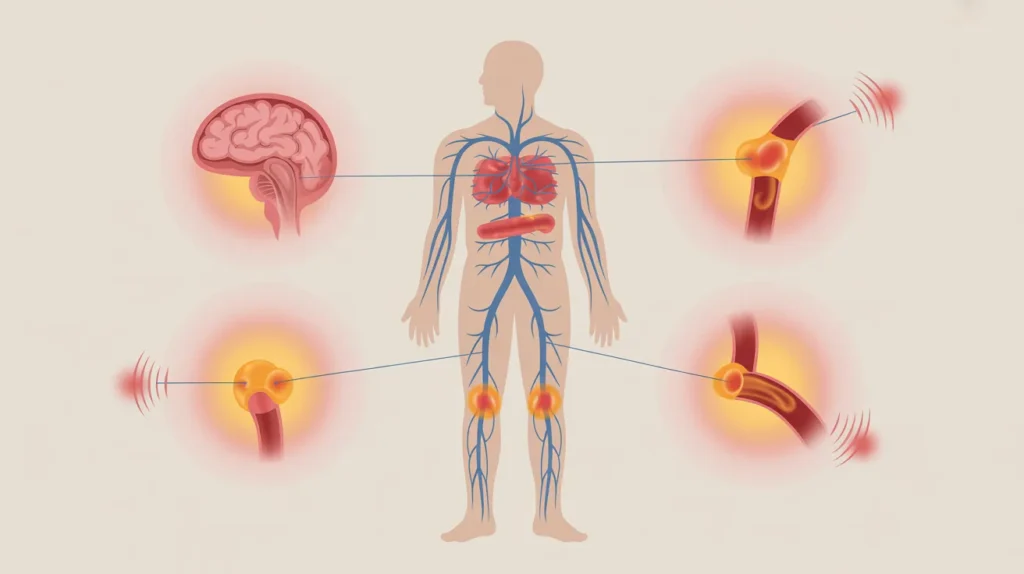
Beyond physical sensations, many people describe:
- Anxiety without a clear cause
- A feeling that something is “wrong”
- Sudden fear during symptom onset
- Confusion or mental fog
These reactions are common when blood flow or pressure affects the brain or nervous system.
When Should You Seek Medical Help?
Seek immediate care if you experience:
- Sudden, severe headache
- Sudden chest, back, or abdominal pain
- Fainting or collapse
- Vision loss
- Weakness on one side of the body
- Confusion or seizures
Schedule a medical evaluation if:
- You have persistent unexplained pain
- You feel a pulsing mass
- You have risk factors and new symptoms
How Are Aneurysms Diagnosed?
Doctors may use:
- CT scans
- MRI scans
- Ultrasound
- Angiography
Often, aneurysms are discovered incidentally during imaging for another reason.
Living with an Unruptured Aneurysm
Many people live full lives with monitored aneurysms.
Management may include:
- Regular imaging
- Blood pressure control
- Smoking cessation
- Medication
- Lifestyle changes
- Preventive surgery in some cases
Practical Tips for Monitoring Your Body
Like watching over a senior pet, awareness matters:
- Notice new or worsening pain
- Track recurring headaches
- Pay attention to unexplained pressure sensations
- Don’t ignore persistent discomfort
- Keep follow-up appointments
Where Aneurysms Can Be Found or Live
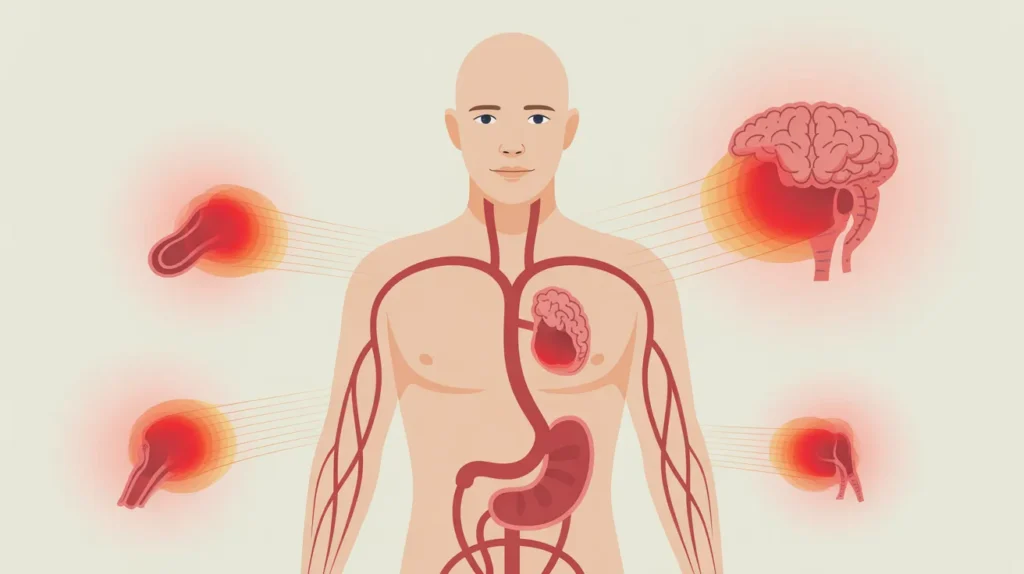
While aneurysms are not living creatures, they tend to “inhabit” specific areas of the body where blood vessels experience high pressure or natural weakness.
Common locations include:
- Brain (cerebral arteries) – near vessel branching points
- Abdominal aorta – below the kidneys
- Thoracic aorta – inside the chest
- Leg arteries – especially behind the knee
- Arms or neck arteries
- Spleen or kidneys (rare)
They often form:
- Where arteries bend or branch
- In areas exposed to long-term pressure
- In weakened vessel walls
Can Stress or Exercise Trigger Symptoms?
Stress and heavy exertion can:
- Increase blood pressure
- Intensify symptoms
- Increase rupture risk in large aneurysms
Gentle, doctor-approved activity is usually safe—but always follow medical guidance.
Frequently Asked Questions (FAQ)
1. Can an aneurysm feel like a regular headache?
Yes. Unruptured brain aneurysms may cause dull or recurring headaches that feel ordinary, which is why they are often overlooked.
2. Can you have an aneurysm and feel completely normal?
Absolutely. Many aneurysms are asymptomatic and only discovered during imaging for unrelated issues.
3. Does aneurysm pain come and go?
It can. Leaking or growing aneurysms may cause intermittent pain before becoming severe.
4. Are aneurysms always fatal if they rupture?
No, but ruptures are extremely serious. Survival depends on location, speed of treatment, and overall health.
Final Thoughts
An aneurysm doesn’t always announce itself loudly. Often, it whispers—through vague discomfort, strange pressure, or subtle changes you can’t quite explain. Listening to your body, respecting unusual sensations, and seeking medical advice early can make all the difference.
Just like noticing when a beloved pet isn’t acting quite right, awareness saves lives.