

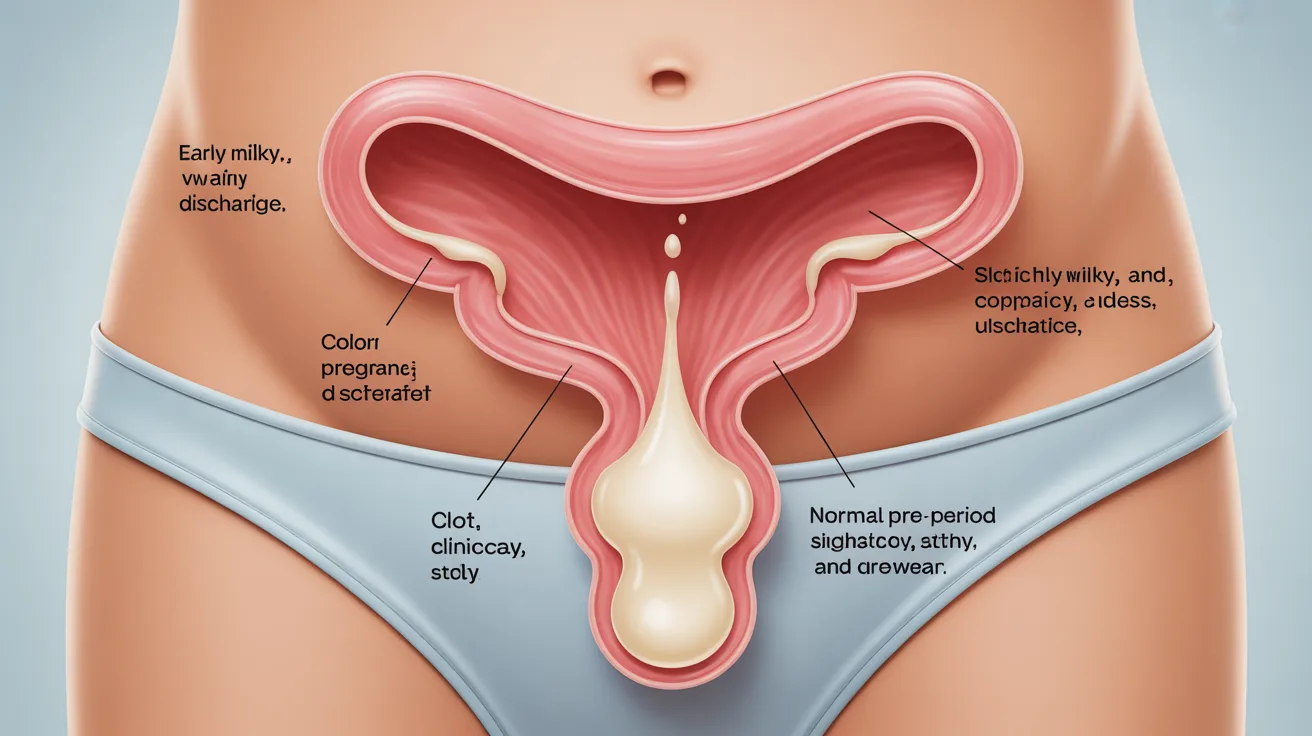
Early pregnancy is a unique and sometimes confusing time for the body. Among the many changes that occur, vaginal discharge is one of the earliest signs many people notice. Understanding what early pregnancy discharge looks like, its causes, and when to seek medical advice can help expectant individuals navigate this critical stage with confidence.
This guide provides a detailed, informative overview, practical tips, and visual cues to help you recognize and understand early pregnancy discharge.
Understanding Vaginal Discharge
Vaginal discharge is a normal bodily function that plays several essential roles, including:
- Cleaning the vagina by removing dead cells and bacteria.
- Preventing infections by maintaining a healthy balance of vaginal flora.
- Indicating hormonal changes in the body.
During early pregnancy, hormonal fluctuations—particularly increases in estrogen and progesterone—can change both the amount and appearance of vaginal discharge.
What Early Pregnancy Discharge Looks Like
Early pregnancy discharge is medically known as leukorrhea, a common phenomenon experienced in the first trimester. While it is generally harmless, its appearance can provide clues about your pregnancy and overall vaginal health.
Common Characteristics:
- Color
- Typically white or off-white.
- Occasionally slightly yellowish, but it should not be green or gray.
- Consistency
- Thin and watery, similar to the consistency of egg whites.
- Sometimes creamy or milky, which is still normal.
- Odor
- Usually mild or odorless.
- Strong, foul, or fishy odor may indicate infection.
- Volume
- Increased compared to pre-pregnancy, often more noticeable at certain times of day.
- Can vary from a few drops to a thin coating in underwear.
- Timing
- Often noticeable one to two weeks after conception.
- May persist and increase as pregnancy progresses.
Hormonal Influence on Discharge
Hormones play a major role in early pregnancy discharge. Here’s how:
- Estrogen: Increases blood flow to the pelvic area, stimulating vaginal tissues and glands, which produce more discharge.
- Progesterone: Thickens cervical mucus to protect the uterus from infections.
- hCG (Human Chorionic Gonadotropin): Supports early pregnancy and indirectly affects vaginal secretions.
These hormonal changes ensure the vagina remains healthy and protected, especially during the crucial first trimester.
Visual Cues and Examples
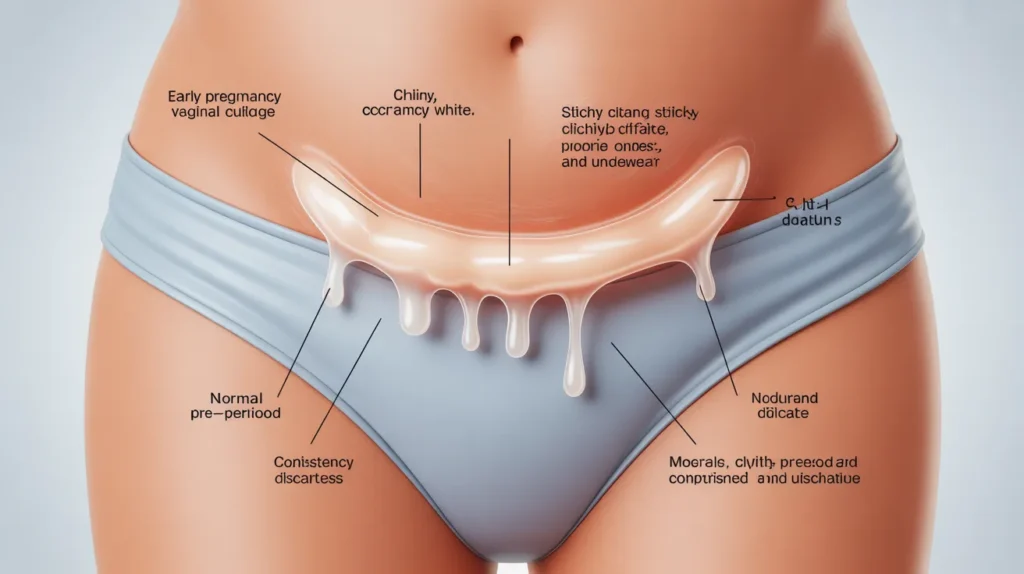
Recognizing early pregnancy discharge often comes down to careful observation. Here are some visual cues:
| Feature | Early Pregnancy Discharge | Possible Concern |
|---|---|---|
| Color | White, creamy, off-white | Green, gray, or brown |
| Texture | Watery, milky, slightly sticky | Clumpy or curd-like |
| Smell | Odorless or mild | Strong, fishy, foul |
| Quantity | Slightly increased | Excessive, accompanied by itching or burning |
Example:
A woman notices a thin, milky discharge after her period ends, slightly more than usual, and with no smell. This is likely normal early pregnancy leukorrhea.
Practical Tips for Managing Early Pregnancy Discharge
While early pregnancy discharge is normal, good hygiene practices can help manage discomfort and prevent infections:
- Wear breathable underwear
- Cotton underwear helps absorb moisture and allows airflow.
- Maintain proper hygiene
- Wash daily with mild, unscented soap and water.
- Avoid douching, which can disrupt vaginal flora.
- Monitor for changes
- Keep track of color, consistency, and odor to catch potential infections early.
- Use panty liners if needed
- They help protect clothing but avoid scented liners that can irritate sensitive skin.
- Stay hydrated
- Drinking water can help maintain overall vaginal health.
- Avoid irritants
- Scented soaps, bubble baths, and harsh detergents can increase irritation.
When to See a Doctor
While early pregnancy discharge is typically harmless, certain signs warrant medical attention:
- Green, gray, or brown discharge
- Foul or strong odor
- Itching, burning, or pain during urination
- Blood in discharge (especially bright red or heavy)
- Thick, clumpy, or cottage cheese-like discharge
These could indicate infections such as bacterial vaginosis, yeast infection, or sexually transmitted infections that require treatment during pregnancy.
Other Factors Affecting Discharge
Several other factors can influence early pregnancy discharge:
- Sexual arousal: Increases vaginal lubrication, which may mix with normal discharge.
- Physical activity: Sweat and friction can increase noticeable discharge.
- Diet and hydration: Poor diet or dehydration may affect vaginal secretions.
- Medications: Certain antibiotics or hormonal supplements may alter discharge characteristics.
Comparing Discharge in Early Pregnancy vs. Menstrual Cycle
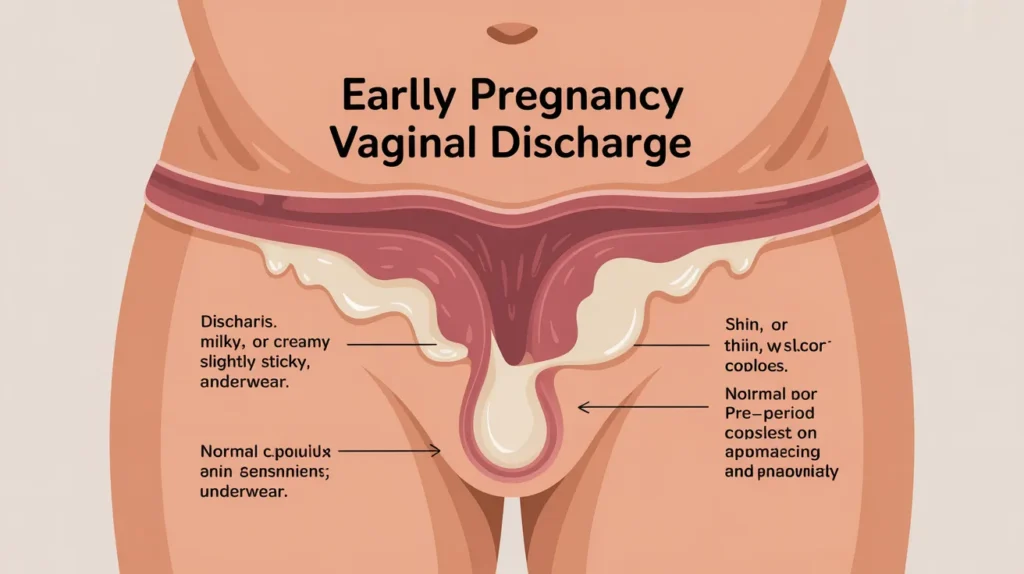
Understanding the difference between early pregnancy discharge and normal pre-period discharge is helpful:
| Feature | Pre-Period Discharge | Early Pregnancy Discharge |
|---|---|---|
| Timing | Just before menstruation | 1–2 weeks after ovulation/conception |
| Color | White, slightly cloudy | White, creamy, milky |
| Consistency | Slightly sticky or thick | Thin, watery, or milky |
| Volume | Moderate | Slightly increased |
| Odor | Mild or none | Usually mild or odorless |
A noticeable increase in discharge with milky consistency, even when menstruation is late or absent, may be an early pregnancy sign.
Where Early Pregnancy Discharge Can Be Found or “Live”
Early pregnancy discharge primarily originates from:
- Cervical glands
- Produces mucus to protect the uterus and create a barrier against infections.
- Vaginal walls
- Epithelial cells naturally shed and combine with cervical mucus.
- Hormonal influence on tissues
- Estrogen and progesterone trigger increased glandular secretions.
Environment:
- Moist, warm, and protected within the vagina, providing a safe habitat for healthy bacteria.
- Changes in pH (slightly more acidic) help prevent harmful microorganisms from colonizing.
Essentially, early pregnancy discharge is a normal, healthy component of the vaginal ecosystem, designed to support pregnancy.
Additional Symptoms Often Observed With Early Pregnancy
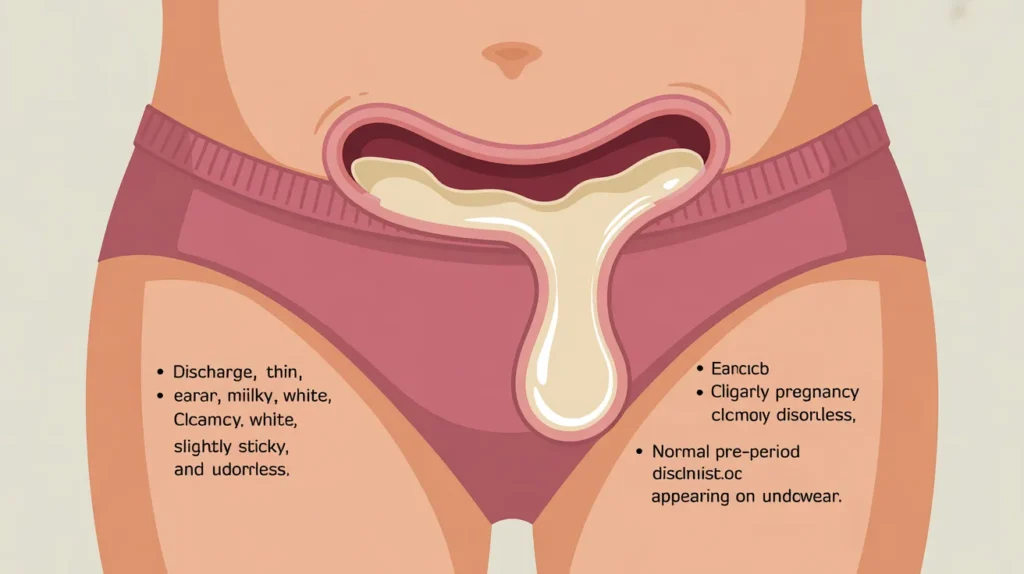
Discharge is just one early sign. It may be accompanied by:
- Breast tenderness: Hormones prepare breasts for milk production.
- Fatigue: Increased progesterone can cause tiredness.
- Mood changes: Hormonal shifts may affect emotions.
- Mild cramping: Similar to menstrual cramps as the uterus adapts.
- Spotting (implantation bleeding): Light pink or brown spotting may occur around the time of early discharge.
Recognizing the combination of symptoms can help confirm early pregnancy before medical testing.
Tips for Monitoring and Tracking Discharge
Keeping track of vaginal discharge can be helpful for your reproductive health:
- Use a notebook or app
- Note color, consistency, volume, and any odor daily.
- Compare pre- and post-ovulation changes
- Helps distinguish between fertility signs and early pregnancy changes.
- Take photos if necessary
- Not to share publicly but to track changes for your healthcare provider.
- Discuss with your OB-GYN
- Bring records during prenatal visits to provide accurate observations.
FAQs About Early Pregnancy Discharge
Q1: Is early pregnancy discharge normal?
Yes. Early pregnancy discharge, or leukorrhea, is a normal sign caused by hormonal changes and increased cervical mucus.
Q2: Can discharge indicate miscarriage?
Not usually. While discharge is normal, bright red bleeding, heavy flow, or tissue in discharge may indicate a problem and requires medical attention.
Q3: How do I know if discharge is due to infection?
Look for green, gray, or brown color, foul odor, clumpy consistency, itching, or burning. These are signs of infection and should be checked promptly.
Q4: How long does early pregnancy discharge last?
It may persist throughout pregnancy, gradually increasing as the uterus and hormones change. Postpartum discharge (lochia) is different and occurs after birth.
Q5: Can I prevent early pregnancy discharge?
You cannot prevent it entirely, as it’s a natural response. Proper hygiene and breathable clothing can help manage discomfort.
Conclusion
Early pregnancy discharge is a natural, usually harmless part of the first trimester. Recognizing its color, consistency, odor, and volume can provide reassurance and help detect potential issues early. Maintaining good hygiene, monitoring changes, and consulting your healthcare provider when necessary are key steps to staying healthy during this transformative period.
Understanding what your body is telling you through discharge empowers you to care for yourself and your pregnancy confidently.