

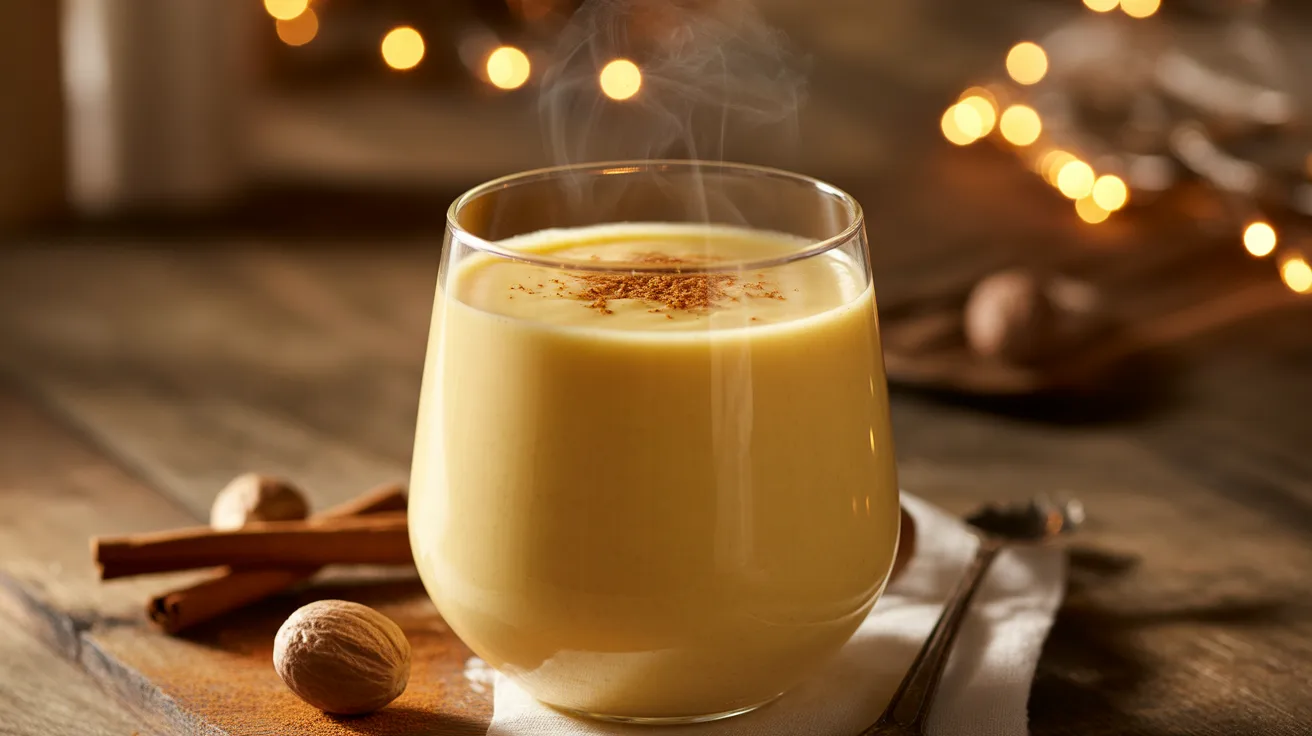
Eggnog is one of those foods that sparks strong opinions. Some people eagerly await its arrival every winter, while others avoid it entirely—often without ever having tasted it. If you’ve ever wondered what eggnog tastes like, you’re not alone. The answer is more complex than simply “sweet” or “creamy.”
Eggnog has a distinctive flavor, texture, aroma, and mouthfeel that can surprise first-time drinkers. Much like a veterinary guide carefully explaining a new animal behavior, this article breaks down eggnog’s taste in a clear, approachable, and practical way—so you know exactly what to expect before your first sip.
Whether you’re curious, cautious, or already a fan, this comprehensive guide will help you understand eggnog from every angle.
What Is Eggnog? (A Quick Overview)
Before discussing taste, it helps to understand what eggnog actually is.
Eggnog is a rich, dairy-based beverage traditionally made with:
- Milk
- Cream
- Eggs (usually yolks)
- Sugar
- Warm spices (nutmeg, cinnamon, vanilla)
In many traditional recipes, alcohol such as rum, brandy, or bourbon is added, though non-alcoholic versions are very common.
Eggnog is most often associated with winter holidays, but its flavor profile is unique enough to deserve attention on its own.
What Does Eggnog Taste Like? The Short Answer
Eggnog tastes:
- Sweet but not sugary
- Rich and creamy
- Warm and spiced
- Smooth, thick, and custard-like
Imagine a blend of:
- Vanilla ice cream (melted)
- Light custard or pudding
- Warm holiday spices
- Creamy milkshake texture
For some people, the taste is comforting and nostalgic. For others, it may feel heavy or unfamiliar at first.
Breaking Down Eggnog’s Flavor Profile
Eggnog’s taste comes from multiple layers working together. Let’s explore each one carefully.
1. Sweetness: Gentle and Rounded
Eggnog is sweet, but not aggressively so.
What kind of sweetness?
- Soft, creamy sweetness from sugar and dairy
- No sharp or sour notes
- Balanced rather than candy-like
Visual cue:
If milk is white and water-thin, eggnog is pale yellow and glossy—suggesting richness rather than intense sweetness.
Tip:
If you dislike very sweet drinks, try:
- Low-sugar eggnog
- Homemade versions with reduced sugar
2. Creaminess: The Defining Feature
The most noticeable characteristic of eggnog is its creamy mouthfeel.
Texture sensations include:
- Thick but pourable
- Smooth coating on the tongue
- Slightly velvety finish
Many first-time drinkers describe eggnog as:
- “Drinkable custard”
- “Liquid dessert”
- “Milkshake without ice”
Symptom of richness:
You may feel full after just a small glass. This is normal.
3. Egg Flavor: Subtle, Not Eggy
Despite the name, eggnog does not taste like scrambled eggs.
Eggs contribute:
- Thickness
- Smoothness
- Mild savory depth
You generally won’t notice an “egg taste” unless:
- The eggnog is poorly made
- Raw eggs are unbalanced by sugar and dairy
Reassurance for beginners:
If you like custard, crème brûlée, or vanilla pudding, you can likely enjoy eggnog.
4. Spice Notes: Warm and Comforting
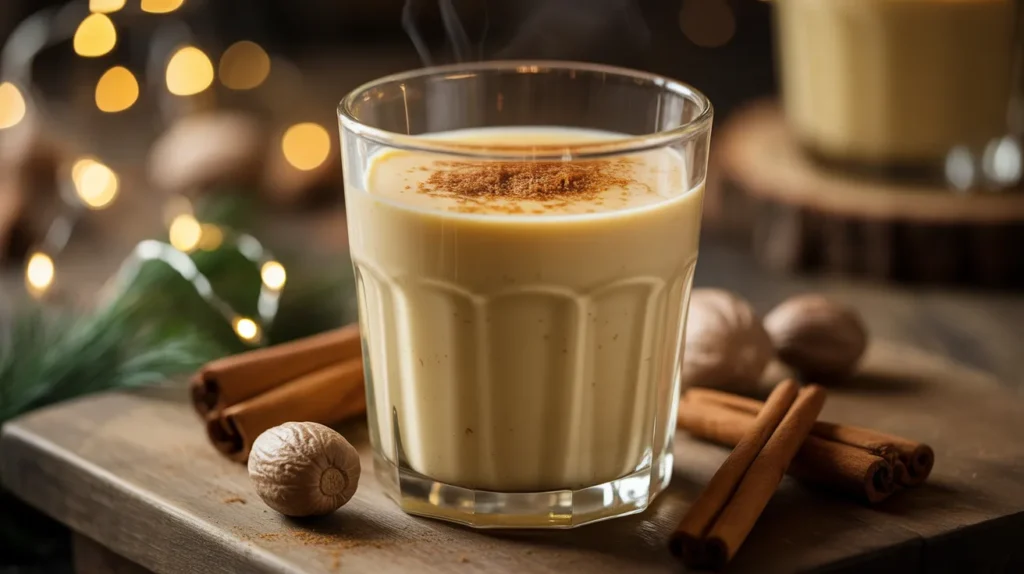
Spices are what give eggnog its recognizable holiday aroma.
Common spices include:
- Nutmeg (most prominent)
- Cinnamon
- Vanilla
- Clove (occasionally)
How spices affect taste:
- Add warmth, not heat
- Enhance sweetness
- Create a cozy aftertaste
Aroma cue:
Before you even sip, eggnog smells warm and bakery-like—similar to holiday desserts.
5. Alcohol Influence (If Included)
Alcohol changes eggnog’s taste significantly.
With alcohol, eggnog becomes:
- Slightly sharper
- Warmer on the throat
- More complex and aromatic
Common alcohol pairings:
- Rum → sweet and smooth
- Brandy → fruity warmth
- Bourbon → smoky and bold
Important note:
Alcoholic eggnog should never taste harsh or burning. If it does, it’s unbalanced.
Texture Matters: How Eggnog Feels in Your Mouth
Taste is only part of the experience. Eggnog’s texture plays a major role.
Typical Texture Characteristics
- Thick but drinkable
- No bubbles or fizz
- Smooth, with no graininess
Possible Texture Variations
| Texture | What It Means |
|---|---|
| Too thin | Low egg or cream content |
| Too thick | Overuse of cream or eggs |
| Grainy | Eggs cooked improperly |
| Frothy | Whipped or shaken version |
Tip:
Chill eggnog before drinking—it improves texture and flavor balance.
How Homemade Eggnog Tastes vs Store-Bought
Eggnog flavor varies widely depending on how it’s made.
Homemade Eggnog Taste
- Fresher and richer
- More egg custard notes
- Customizable sweetness and spice
Pros:
- Better flavor control
- Less artificial aftertaste
Cons:
- Requires proper food safety
- Stronger egg presence if misbalanced
Store-Bought Eggnog Taste
- Smoother and more uniform
- Often sweeter
- Less egg flavor
Pros:
- Convenient
- Consistent texture
Cons:
- May taste artificial
- Sometimes overly sweet
Does Eggnog Taste Good to Everyone?

Not always—and that’s okay.
People Who Usually Like Eggnog
- Fans of custard or pudding
- Milkshake lovers
- People who enjoy warm spices
- Dessert-drink enthusiasts
People Who May Dislike Eggnog
- Those sensitive to rich dairy
- People who dislike thick drinks
- Anyone expecting a light beverage
Symptom of dislike:
Feeling “overwhelmed” after a few sips is common among first-timers.
How to Make Eggnog Taste Better (For Beginners)
If you’re unsure about eggnog, these tips can help.
Beginner-Friendly Tips
- Serve chilled, not warm
- Start with a small glass
- Try non-alcoholic versions first
- Sprinkle extra nutmeg on top
- Mix with coffee or chai for balance
Flavor Adjustments
- Too thick? Add milk
- Too sweet? Add a pinch of salt
- Too bland? Add vanilla or spice
Where Eggnog Can Be Found or Live
While eggnog is not a living creature, it does have specific environments where it “exists” and thrives.
Common Places Eggnog Is Found
- Grocery stores (seasonal dairy sections)
- Coffee shops (holiday drinks)
- Bakeries and cafes
- Holiday markets
- Homes during winter celebrations
Cultural “Habitats”
Eggnog is most commonly found in:
- North America
- Parts of Europe
- Holiday gatherings and winter events
Seasonal Behavior
Eggnog is typically available:
- Late November through early January
- Rarely year-round in most regions
Visual cue:
If you see festive packaging with snowflakes or nutmeg imagery, eggnog season has arrived.
Health & Sensory Considerations
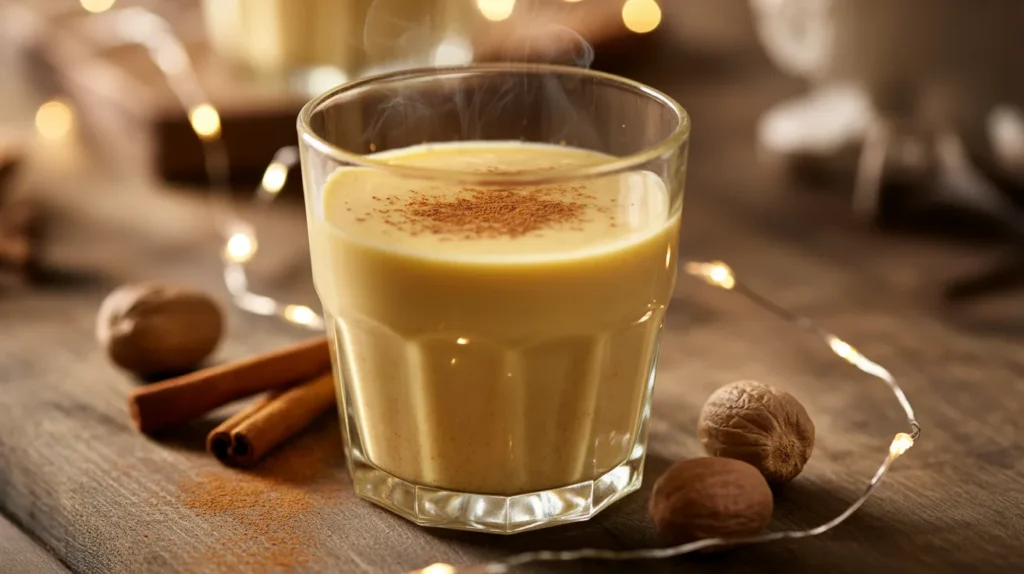
Eggnog is rich, and that affects how your body responds.
Common Sensations After Drinking Eggnog
- Feeling full quickly
- Warmth in the chest (especially with alcohol)
- Lingering sweetness on the palate
Tips for Sensitive Individuals
- Choose low-fat versions
- Drink slowly
- Avoid large servings
- Skip alcohol if sensitive
Is Eggnog an Acquired Taste?
For some people, yes.
Much like coffee or certain cheeses, eggnog may:
- Taste unusual at first
- Become enjoyable with familiarity
- Improve when paired with food
Many fans report:
“I didn’t like it the first time—but now I look forward to it every year.”
Common Myths About Eggnog Taste
Myth 1: Eggnog Tastes Like Raw Eggs
Truth: Properly made eggnog does not taste eggy.
Myth 2: Eggnog Is Overwhelmingly Sweet
Truth: Sweetness varies by brand and recipe.
Myth 3: Eggnog Is Only for Alcohol Drinkers
Truth: Non-alcoholic eggnog is extremely popular.
Frequently Asked Questions (FAQ)
1. Does eggnog taste like custard?
Yes. Eggnog tastes very similar to a thin, drinkable custard with warm spices and cream.
2. Is eggnog supposed to taste thick?
Yes. Thickness is a key characteristic. If it’s watery, it’s not traditional eggnog.
3. Why do some people hate the taste of eggnog?
Common reasons include:
- Dislike of thick drinks
- Sensitivity to rich dairy
- Unfamiliar spice combinations
4. Can eggnog taste different each time?
Absolutely. Taste changes based on:
- Ingredients
- Alcohol content
- Homemade vs store-bought
- Serving temperature
Final Thoughts: So, What Does Eggnog Taste Like?
Eggnog is best described as a rich, creamy, spiced dessert drink with a smooth texture and comforting warmth. It’s not meant to be refreshing or light—it’s meant to feel indulgent, seasonal, and cozy.
If you enjoy custards, milkshakes, or holiday spices, eggnog is worth trying at least once. And if you don’t love it the first time, small adjustments can make a big difference.