


If you’ve ever seen the term GED on a job application, school website, or education forum and wondered exactly what it means, you’re not alone. Many people recognize the acronym but don’t fully understand what it stands for, how it works, or who it’s meant for.
This in-depth guide answers “What does GED stand for?” and goes far beyond the definition. Think of it like a friendly, professional care guide—similar to how a vet explains an animal’s health—only here, we’re caring for your educational future 🐾📘.
Whether you’re considering earning a GED, supporting someone who is, or just curious, this article will walk you through everything you need to know in a clear, practical, and reassuring way.
1. What Does GED Stand For?
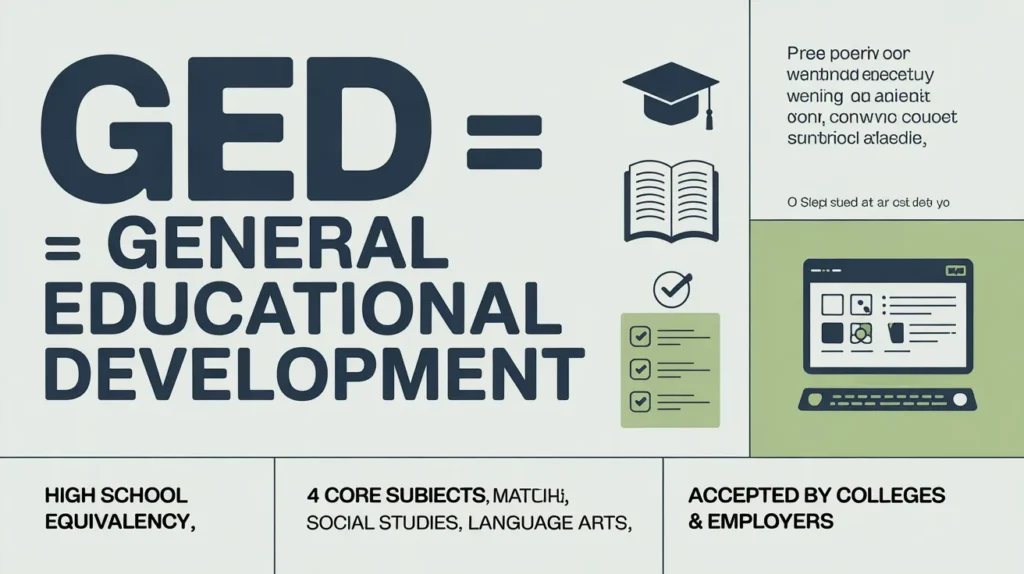
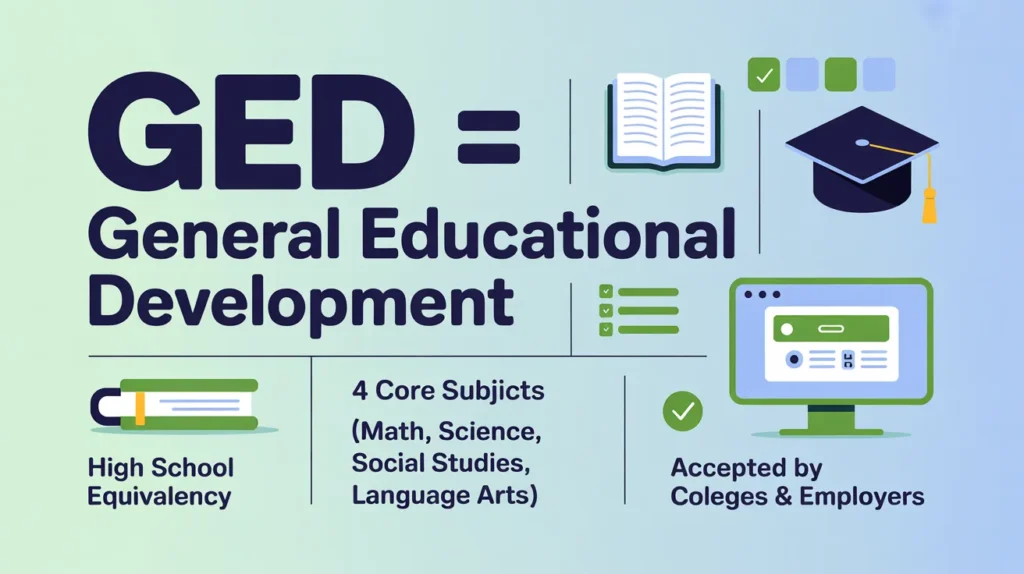
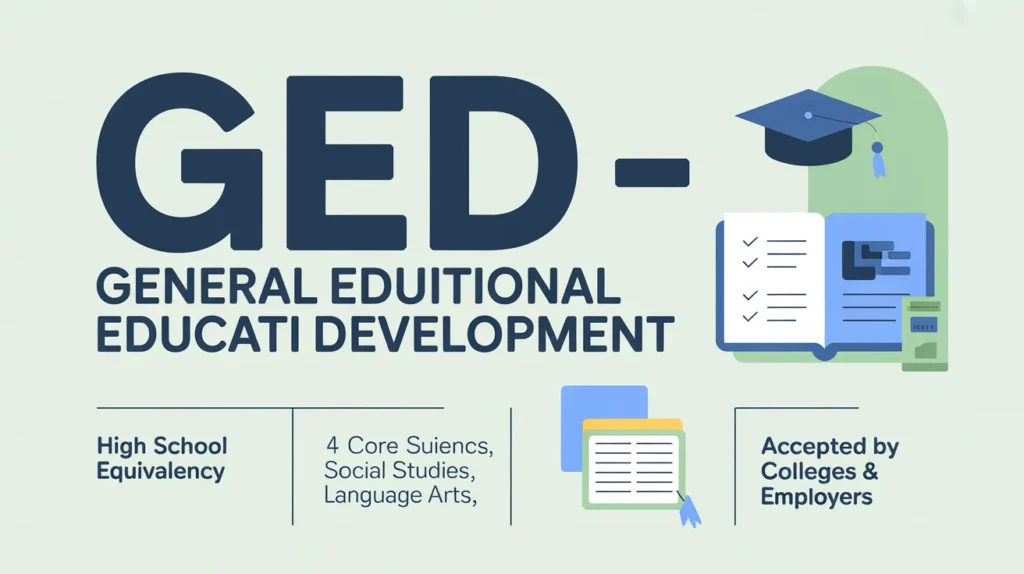
GED stands for General Educational Development.
In simple terms, the GED is a credential that shows you have the same academic knowledge and skills as someone who has completed high school.
When you pass the GED tests, you earn a GED certificate or diploma, which is widely accepted as an alternative to a traditional high school diploma.
2. The Simple Meaning of GED (In Plain English)
Let’s break it down like a care label:
- General – Covers broad, essential subjects
- Educational – Focused on academic knowledge
- Development – Measures learning growth over time
👉 Plain-English version:
A GED proves you learned what most people learn in high school—even if you didn’t finish high school in the traditional way.
3. A Brief History of the GED
Understanding where something comes from often helps us trust it more.
Origins of the GED
- Created in 1942
- Developed to help World War II veterans
- Allowed returning soldiers to prove high school–level knowledge
How It Evolved
Over time, the GED expanded to serve:
- Adults who left school early
- People with family or work responsibilities
- Learners who needed a second chance
Today, the GED is used worldwide and continually updated to reflect modern education standards.
4. Why the GED Exists
Just like not every pet thrives in the same environment, not every student thrives in a traditional classroom.
The GED exists to:
- Provide educational flexibility
- Offer a second chance
- Remove barriers caused by:
- Financial hardship
- Health issues
- Family responsibilities
- Learning differences
The goal is not to “replace” high school, but to recognize equivalent learning.
5. GED vs High School Diploma
This is one of the most common questions, so let’s compare them clearly.
Similarities
- Both represent high school–level education
- Both are accepted by most employers
- Both can qualify you for college or training programs
Key Differences
| GED | High School Diploma |
|---|---|
| Earned by passing tests | Earned by completing coursework |
| Faster for many adults | Takes 4 years |
| Self-paced study | Structured school schedule |
| Ideal for nontraditional learners | Best for traditional students |
📝 Important note: Neither option is “better”—they serve different needs.
6. Who Should Consider a GED?
The GED is especially helpful for people who:
- Left high school before graduating
- Are adults returning to education
- Need a flexible study schedule
- Want faster entry into work or college
- Are homeschooling without formal diplomas
Signs You Might Benefit From a GED
Think of these like “symptoms” indicating a GED could help:
- Feeling stuck in low-paying jobs
- Job applications requiring “high school diploma or equivalent”
- Desire to attend college or vocational school
- Wanting personal accomplishment and confidence
7. Subjects Covered in the GED Test
The GED test is divided into four main subjects, similar to a basic health checkup covering all vital areas.
1. Mathematical Reasoning
- Basic algebra
- Geometry
- Data interpretation
- Real-life math problems
2. Reasoning Through Language Arts (RLA)
- Reading comprehension
- Grammar and usage
- Writing extended responses
3. Science
- Life science
- Physical science
- Earth and space science
- Interpreting charts and experiments
4. Social Studies
- Civics and government
- U.S. history
- Economics
- Geography
Each section tests thinking and problem-solving, not memorization.
8. How the GED Test Works
Test Format
- Computer-based
- Multiple-choice and short answers
- Some extended written responses
Scoring
- Each subject scored individually
- Passing score demonstrates high school equivalency
- Scores may indicate college readiness
Retakes
- You can retake sections if needed
- No penalty for retaking (though fees may apply)
9. Signs the GED May Be Right for You
Like a vet observing behavior, these signs suggest GED readiness:
- You learn well independently
- You prefer goal-based study
- You already know much of the material
- You want measurable progress quickly
Emotional Indicators
- Motivation to improve life circumstances
- Readiness to commit time and effort
- Confidence-building mindset
10. Common Myths About the GED
Let’s clear up misinformation.
Myth 1: “GEDs are for dropouts only”
❌ False
✔ GED holders include professionals, entrepreneurs, and college graduates.
Myth 2: “Employers don’t respect GEDs”
❌ False
✔ Most employers accept GEDs as equivalent.
Myth 3: “GED is easier than high school”
❌ False
✔ It’s challenging and requires real knowledge.
11. Benefits of Earning a GED
Think of the GED as preventive care for your career.
Major Benefits
- Better job opportunities
- Higher earning potential
- Eligibility for college and training programs
- Personal confidence and pride
- Lifelong educational foundation
Long-Term Advantages
- Access to promotions
- Career switching flexibility
- Improved problem-solving skills
12. Limitations and Considerations
Just like any treatment, the GED isn’t perfect for everyone.
Possible Limitations
- Some elite institutions prefer traditional diplomas
- Requires strong self-discipline
- Testing fees may apply
How to Manage These
- Research your goals in advance
- Combine GED with college credits or certifications
- Use prep programs and study guides
13. Where GED Can Be Found or Live
Unlike animals with habitats, the GED “lives” in educational environments.
Common GED Locations
- Adult education centers
- Community colleges
- Online learning platforms
- Workforce development programs
- Testing centers
Who Hosts GED Programs?
- Government education departments
- Nonprofit organizations
- Online education providers
- Correctional education systems
🌍 The GED is available in many countries, making it accessible worldwide.
14. How Employers and Colleges View the GED
Employers
Most employers:
- Treat GED as equivalent to high school
- Focus more on skills and experience
- Value motivation and persistence
Colleges
Many colleges:
- Accept GED holders
- May require placement tests
- Offer bridge or preparatory programs
15. Tips for Preparing for the GED
Study Tips
- Create a weekly schedule
- Focus on weak subjects first
- Use practice tests
- Study in short, consistent sessions
Health-Style Advice (Yes, Really!)
- Sleep well before studying
- Stay hydrated
- Take breaks to avoid burnout
- Celebrate small wins 🎉
16. Visual Cues and Practical Examples
Visual Cues You’re Ready
- Practice scores consistently passing
- Comfort with reading graphs
- Ability to explain concepts aloud
- Reduced test anxiety
Practical Example
Maria, age 32:
- Left school at 16
- Studied evenings for 6 months
- Passed GED
- Enrolled in nursing assistant program
Her GED was the gateway to a new career.
17. Frequently Asked Questions (FAQ)
Q1: What does GED stand for exactly?
GED stands for General Educational Development, a credential showing high school–level academic skills.
Q2: Is a GED the same as a diploma?
It is equivalent, but earned through testing rather than coursework.
Q3: Can I go to college with a GED?
Yes. Many colleges and training programs accept GED graduates.
Q4: How long does it take to earn a GED?
It depends on your starting level—some finish in months, others take longer.
18. Final Thoughts
The GED is not a shortcut or a fallback—it’s a valid, respected educational pathway. If traditional schooling didn’t work for you, the GED offers a second chance without judgment.
Just like good care improves long-term health, investing in education through the GED can improve your career, confidence, and future opportunities.