

Hearing the Word “Intubated”
Hearing that someone is “intubated” can be frightening, confusing, and overwhelming—especially if you’re not familiar with medical terms. Many people first encounter the word during emergencies, ICU stays, surgeries, or serious illnesses like pneumonia or COVID-19.
Just like when a veterinarian explains a procedure for a beloved pet, understanding what’s happening, why it’s happening, and what to expect can make a stressful situation feel more manageable.
This guide explains what intubated means, why it’s done, what it looks like, how long it lasts, and what recovery can involve, using clear language and practical examples.
What Does “Intubated” Mean?
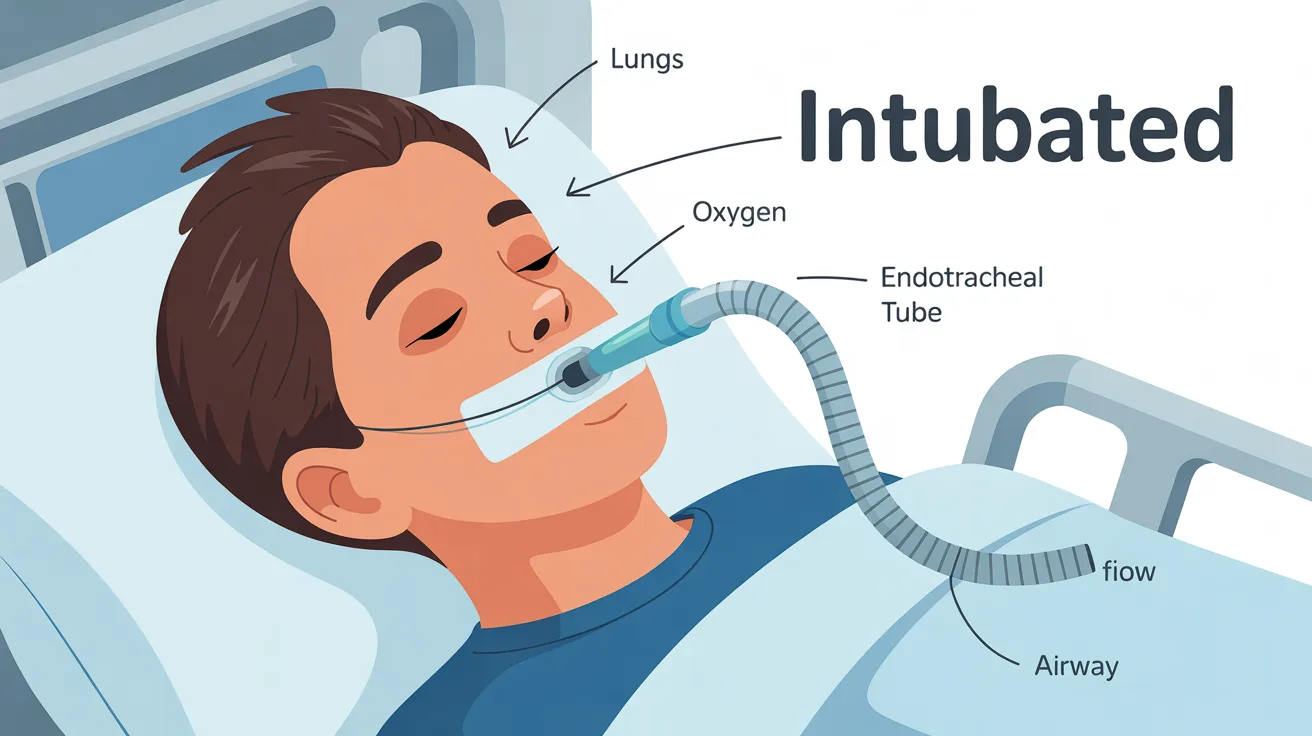
Intubated means that a medical tube has been placed into a person’s airway (windpipe) to help them breathe.
This tube is usually connected to a ventilator, a machine that assists or fully controls breathing.
Simple definition:
An intubated person has a breathing tube in their throat to keep their airway open and deliver oxygen to their lungs.
What Is Intubation?
Intubation explained step by step
Intubation is a medical procedure in which a healthcare provider places a thin plastic tube (called an endotracheal tube) through:
- The mouth (most common), or
- The nose (less common)
The tube passes through the vocal cords and into the trachea (windpipe).
Once in place, it allows doctors to:
- Deliver oxygen
- Remove carbon dioxide
- Protect the airway from blockage or aspiration
Why Do Doctors Intubate Someone?
Intubation is done only when medically necessary. It’s not a treatment itself—it’s support while the body heals.
Common reasons for intubation
A person may be intubated if they:
- Cannot breathe adequately on their own
- Are not getting enough oxygen
- Are at risk of airway blockage
- Need surgery under general anesthesia
- Are unconscious or unresponsive
Medical Conditions That May Require Intubation
Respiratory causes
- Severe pneumonia
- COVID-19 complications
- Asthma attacks
- Acute respiratory distress syndrome (ARDS)
- Chronic obstructive pulmonary disease (COPD)
Neurological causes
- Stroke
- Traumatic brain injury
- Seizures
- Drug overdose
Emergency and trauma situations
- Cardiac arrest
- Severe bleeding
- Shock
- Major accidents
Surgical reasons
- General anesthesia during surgery
- Protection of the airway during procedures
What Does an Intubated Person Look Like?
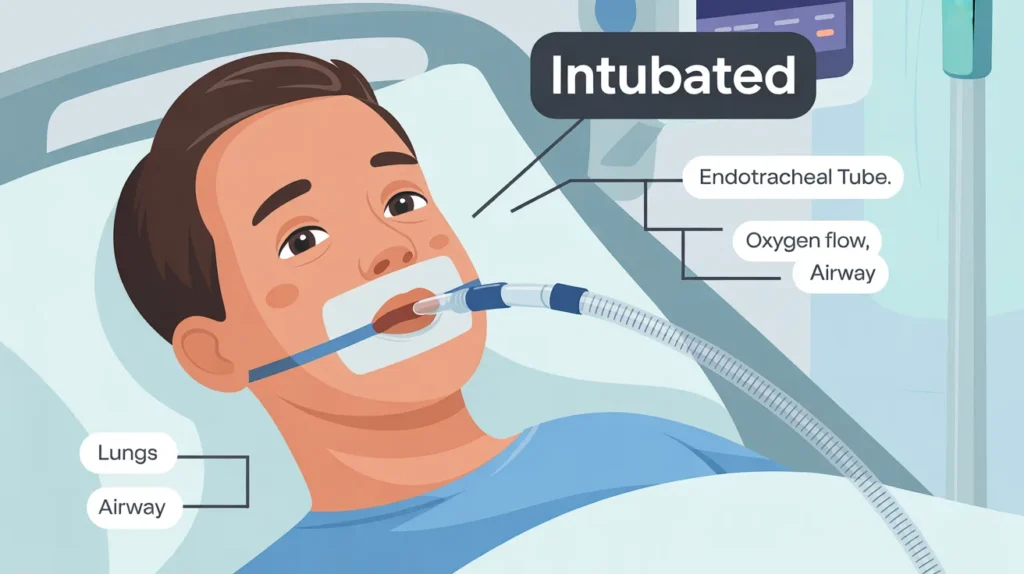
Seeing someone intubated can be emotionally difficult. Knowing what to expect can help reduce shock.
Common visual cues
An intubated person may have:
- A tube secured at the mouth with tape or a holder
- A ventilator beside the bed
- Sedation medications keeping them calm or asleep
- Monitoring equipment (heart rate, oxygen levels)
- IV lines and fluids
Important note:
Intubation does not automatically mean someone is dying.
Many patients are intubated temporarily and recover fully.
Is an Intubated Person Awake?
Usually, no
Most intubated patients are:
- Sedated
- Asleep
- Minimally responsive
This is because the tube can be uncomfortable and may trigger gagging or coughing.
Levels of awareness vary
Some patients:
- Can open their eyes
- Can respond by nodding or squeezing a hand
- Cannot speak but may understand what’s being said
Can an Intubated Person Talk?
No—speech is not possible while intubated.
The tube passes through the vocal cords, preventing sound production.
How communication happens instead
- Hand squeezing
- Writing (if awake)
- Head nods
- Eye movements
- Communication boards
Just like animals recovering from procedures, patients may seem quiet or confused—but awareness can still be present.
How Long Is Someone Usually Intubated?
There is no single timeline.
Short-term intubation
- A few hours (during surgery)
- 1–3 days (mild to moderate illness)
Long-term intubation
- Several days to weeks (severe illness or injury)
If intubation is needed for a long period, doctors may recommend a tracheostomy, which places a tube directly into the neck.
Is Being Intubated Painful?
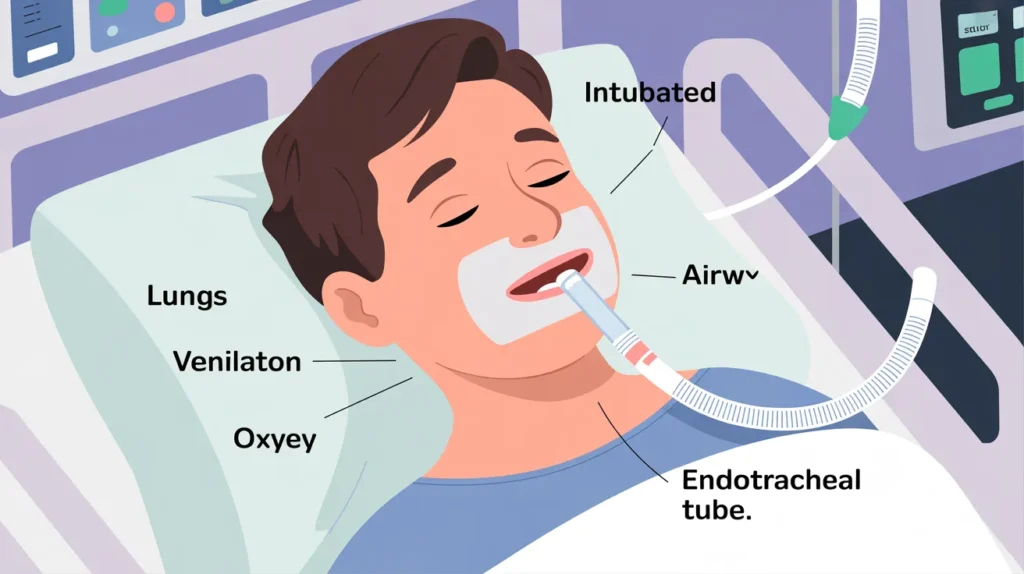
During placement
- The patient is sedated or unconscious
- Pain is not usually felt
While intubated
- Sedation minimizes discomfort
- Throat irritation may occur
After removal
- Sore throat
- Hoarseness
- Mild coughing
These symptoms usually improve within a few days.
Risks and Complications of Intubation
Like any medical procedure, intubation has risks—but doctors carefully monitor for them.
Possible complications
- Sore throat or vocal cord irritation
- Dental or lip injury
- Lung infection (ventilator-associated pneumonia)
- Lung injury from pressure
- Difficulty swallowing temporarily
Most complications are manageable and temporary.
What Happens When Someone Is Removed From Intubation?
This process is called extubation.
Signs a patient may be ready
- Improved oxygen levels
- Stable breathing
- Ability to cough and protect the airway
- Reduced sedation
After extubation
- Oxygen via mask or nasal cannula
- Hoarse voice
- Fatigue
- Gradual return to normal breathing
Recovery After Being Intubated
Recovery depends on:
- Length of intubation
- Underlying illness
- Overall health
Common recovery experiences
- Weakness
- Shortness of breath
- Confusion or delirium
- Trouble swallowing temporarily
Helpful recovery tips
- Voice rest
- Hydration
- Breathing exercises
- Physical therapy
- Emotional support
Emotional Impact of Intubation
Just like pets can feel stressed after medical procedures, humans may experience emotional aftereffects.
Possible emotional responses
- Anxiety
- Nightmares
- ICU delirium
- Depression
- Fear of recurrence
Support from family, counseling, and reassurance can make a huge difference.
Intubation vs Ventilation: What’s the Difference?
| Term | Meaning |
|---|---|
| Intubation | Placing the breathing tube |
| Ventilation | The machine helping with breathing |
You can be:
- Intubated and ventilated
- Intubated briefly without long-term ventilation
Intubation in Children and Infants
Intubation is also used in pediatric care.
Common reasons
- Premature birth
- Severe infections
- Congenital conditions
- Surgery
Children are closely monitored, and tubes are sized carefully for safety.
Intubation in Emergency Situations
Emergency intubation may happen:
- At the scene of an accident
- In an ambulance
- In the emergency room
It can look sudden and dramatic, but it’s often life-saving.
Where Intubation Can Be Found or Live
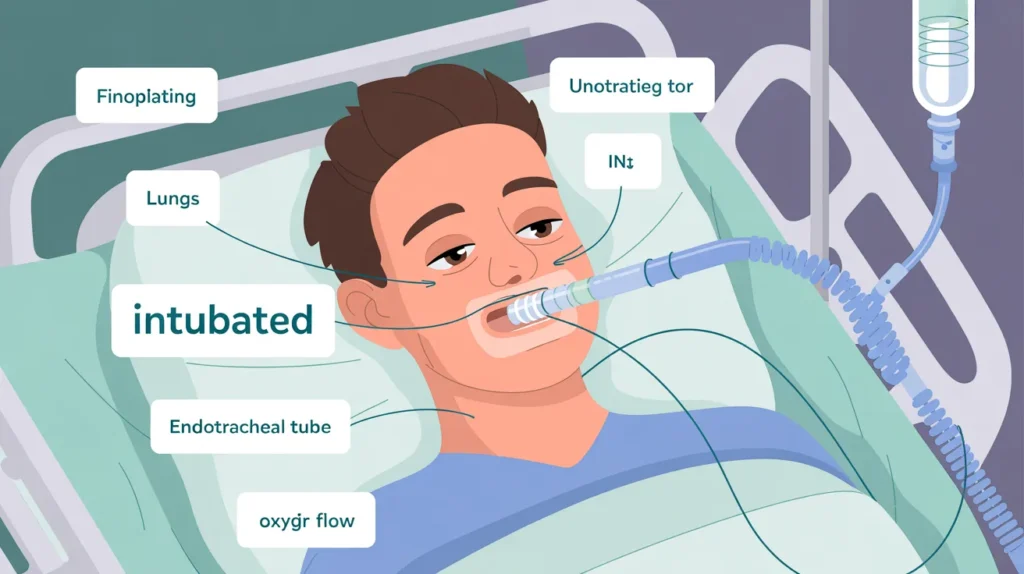
(Understanding the “habitat” of intubation)
While intubation isn’t a creature, it exists in specific environments, much like animals thrive in certain habitats.
Common places where intubation occurs
- Emergency rooms
- Intensive Care Units (ICUs)
- Operating rooms
- Ambulances
- Trauma centers
- Field hospitals
Hosts (patients) who may require intubation
- Critically ill adults
- Surgical patients
- Accident victims
- Infants with breathing difficulty
- Patients under anesthesia
Intubation “lives” where advanced medical care is available.
Common Myths About Intubation
Myth 1: Intubation means death is near
Truth: Many people recover fully after intubation.
Myth 2: Intubation is always permanent
Truth: Most intubations are temporary.
Myth 3: Intubated patients can’t hear
Truth: Hearing may still be intact, even if sedated.
How Family Members Can Help
Supportive actions
- Speak calmly
- Hold hands (if allowed)
- Reassure the patient
- Ask the care team questions
- Take care of yourself too
Your presence matters—even when words aren’t possible.
When to Ask the Doctor Questions
Consider asking:
- Why is intubation needed?
- How long might it last?
- What signs of improvement should we watch for?
- What are the next steps?
Doctors appreciate informed, involved families.
Frequently Asked Questions (FAQ)
1. Is being intubated the same as being in a coma?
No. Intubation is a breathing support method. Some patients are awake; others are sedated.
2. Can someone survive after being intubated?
Yes. Many patients are intubated temporarily and recover completely.
3. How long does it take to recover after intubation?
Recovery can take days to weeks, depending on illness severity and duration of intubation.
4. Will the voice return to normal?
In most cases, yes. Hoarseness usually resolves within days or weeks.
Key Takeaways
- Intubated means a breathing tube is helping someone breathe
- It’s often temporary and life-saving
- Patients are usually sedated and monitored closely
- Recovery is possible and common
- Understanding reduces fear and uncertainty