
A Complete, Plain-English Guide to Prescription Drug Coverage
Medicare Part D can feel confusing at first glance. It’s full of plan names, drug lists, tiers, coverage stages, and unfamiliar terms that can overwhelm even the most organized person. But just like learning how to care for a new pet, once you understand the basics—and know what signs to watch for—it becomes much easier to manage.
This guide walks you through exactly what Medicare Part D covers, what it doesn’t, how it works day to day, and how to tell whether a plan is meeting your needs. We’ll use simple explanations, real-life examples, and visual cues to help everything click.
Whether you’re new to Medicare, helping a loved one, or reviewing your current coverage, this article is designed to be a reliable reference you can come back to anytime.
What Is Medicare Part D?
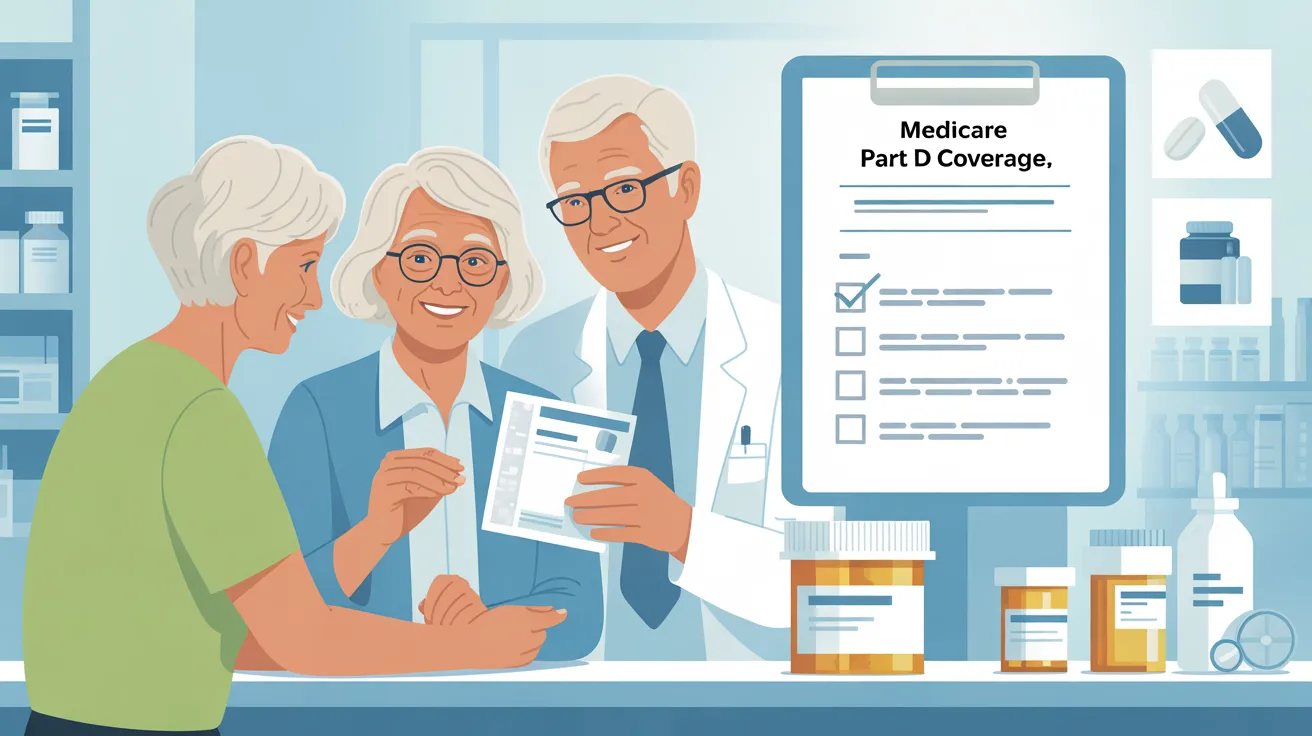
Medicare Part D is the part of Medicare that covers prescription drugs. It helps pay for medications you take at home, rather than drugs given in a hospital or doctor’s office.
Key Characteristics of Medicare Part D
- Offered by private insurance companies
- Approved and regulated by Medicare
- Available as:
- A standalone drug plan (PDP), or
- A Medicare Advantage plan (Part C) that includes drug coverage
- Requires a monthly premium, plus other costs
Think of Medicare Part D like a feeding plan for your medications—it doesn’t cover everything automatically, but it follows structured rules to keep costs manageable.
What Does Medicare Part D Cover?
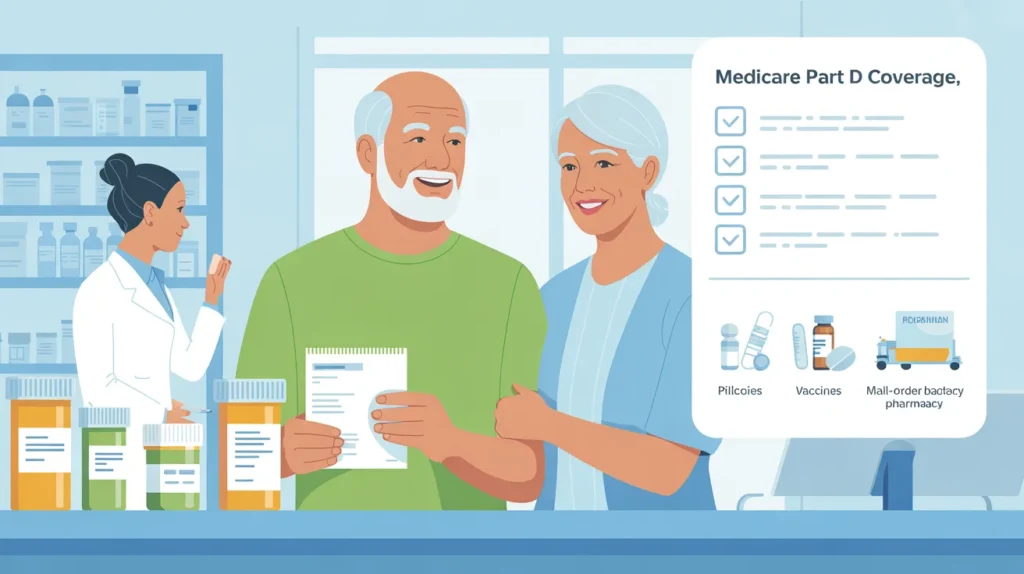
At its core, Medicare Part D covers outpatient prescription medications. These are drugs you pick up at a pharmacy or receive by mail and take on your own.
Types of Drugs Medicare Part D Typically Covers
Most Part D plans cover medications in the following categories:
- Generic prescription drugs
- Brand-name drugs
- Specialty medications (often for complex conditions)
- Vaccines not covered under Medicare Part B
- Maintenance medications for chronic conditions
Each plan has a formulary, which is its official list of covered drugs.
Understanding the Medicare Part D Formulary
A formulary is like a care chart—it tells you what’s covered, how much it costs, and what rules apply.
How Formularies Work
- Drugs are grouped into tiers
- Lower tiers = lower cost
- Higher tiers = higher cost
Common Drug Tiers
- Tier 1 – Preferred generic drugs (lowest cost)
- Tier 2 – Non-preferred generics or preferred brands
- Tier 3 – Non-preferred brand-name drugs
- Tier 4 or 5 – Specialty drugs (highest cost)
💡 Visual cue:
If your drug moves to a higher tier, expect:
- Higher copays or coinsurance
- Possible restrictions like prior authorization
Required Drug Categories (Protected Classes)
Medicare requires Part D plans to cover drugs in certain critical categories to ensure people with serious conditions aren’t left without treatment.
Protected Drug Classes Include:
- Antidepressants
- Antipsychotics
- Anticonvulsants (for seizures)
- Antiretrovirals (for HIV)
- Immunosuppressants (after organ transplant)
- Antineoplastics (cancer drugs)
Plans must cover most drugs in these classes, even if they’re expensive.
What Medicare Part D Does NOT Cover
Just as important as knowing what’s covered is knowing what isn’t.
Commonly Excluded Medications
Medicare Part D generally does not cover:
- Over-the-counter drugs (like aspirin or vitamins)
- Cosmetic or lifestyle medications
- Drugs for:
- Weight loss or gain
- Hair growth
- Erectile dysfunction (with limited exceptions)
- Fertility
- Certain vitamins and supplements
🚩 Symptom of non-coverage:
If the pharmacy says “not covered” and offers a cash price, the drug is likely excluded or off-formulary.
Vaccines and Medicare Part D
Many people don’t realize that Medicare Part D covers most adult vaccines not covered under Part B.
Examples of Vaccines Covered by Part D
- Shingles (Shingrix)
- Tdap (tetanus, diphtheria, pertussis)
- Some travel vaccines
In many cases, you pay nothing out of pocket if the pharmacy bills Part D directly.
How Medicare Part D Costs Work
Medicare Part D has several cost components. Understanding them helps you avoid surprises.
Common Costs You May Pay
- Monthly premium
- Annual deductible
- Copayments or coinsurance
- Out-of-pocket maximum (catastrophic phase)
The Four Stages of Medicare Part D Coverage
Medicare Part D works in stages, similar to growth phases in a care plan.
1. Deductible Stage
- You pay full cost of drugs until deductible is met
- Some plans waive deductibles for certain drugs
2. Initial Coverage Stage
- You pay copays or coinsurance
- Plan pays its share
3. Coverage Gap (Donut Hole)
- You pay a higher percentage of drug costs
- Discounts apply for brand-name and generic drugs
4. Catastrophic Coverage
- You pay significantly less per prescription
- Protection against very high drug costs
📌 Visual cue:
If your pharmacy receipts suddenly jump mid-year, you may have entered the donut hole.
Prior Authorization, Quantity Limits, and Step Therapy
Some medications come with rules—like a training schedule.
Common Restrictions Explained
- Prior authorization: Doctor must justify the drug
- Quantity limits: Caps on how much you can get
- Step therapy: You must try cheaper drugs first
These rules help control costs but can delay treatment if not managed properly.
Medicare Part D and Mail-Order Pharmacies
Many Part D plans encourage or require mail-order pharmacies for maintenance medications.
Benefits of Mail Order
- 90-day supplies
- Lower cost per dose
- Convenient home delivery
This can be especially helpful for people managing chronic conditions.
How Medicare Part D Works With Other Medicare Parts
Understanding how Part D fits into the bigger Medicare picture is crucial.
Medicare Part B vs Part D
| Drug Type | Covered By |
|---|---|
| Doctor-administered drugs | Part B |
| Home prescriptions | Part D |
| Some vaccines | Part D |
| Chemotherapy (outpatient) | Part B or D (varies) |
Who Is Eligible for Medicare Part D?
You can enroll in Part D if you are:
- Enrolled in Medicare Part A and/or Part B
- Living in the plan’s service area
Late Enrollment Penalty
If you don’t enroll when first eligible and don’t have other credible coverage, you may pay a lifetime penalty.
⚠️ Symptom to watch for:
Higher monthly premiums that never go away.
Extra Help and Low-Income Subsidies
Medicare offers programs to reduce Part D costs for people with limited income.
Extra Help Can Reduce or Eliminate:
- Premiums
- Deductibles
- Copays
This is like a nutritional supplement—small support that makes a big difference.
Where Medicare Part D Can Be Found or Live
While Medicare Part D isn’t a living creature, it does exist within specific environments and systems—much like a species living within a habitat.
Primary “Habitats” of Medicare Part D
- Private insurance companies approved by Medicare
- Standalone Prescription Drug Plans (PDPs)
- Medicare Advantage (Part C) plans
- Retail pharmacies
- Mail-order pharmacy networks
- Online plan comparison tools
- State Health Insurance Assistance Programs (SHIPs)
📍 Visual cue:
If you see “PDP” or “MAPD,” you’ve found Medicare Part D in its natural habitat.
Signs Your Medicare Part D Plan Is (or Isn’t) Working Well
Healthy Coverage Signs
- Prescriptions are consistently affordable
- Drugs are covered without frequent exceptions
- Pharmacy staff rarely flag issues
Warning Signs
- Frequent denials
- High out-of-pocket costs
- Medications removed from formulary mid-year
- Repeated prior authorization delays
If you notice these symptoms, it may be time to switch plans during open enrollment.
Tips for Choosing the Best Medicare Part D Plan
Like choosing the right care routine, small details matter.
Practical Selection Tips
- List all current medications
- Check formularies carefully
- Compare total annual cost—not just premiums
- Confirm preferred pharmacies
- Review plan every year
Plans change annually, even if your medications don’t.
Medicare Part D Enrollment Periods
You can’t enroll or switch plans anytime.
Key Enrollment Windows
- Initial Enrollment Period – When first eligible
- Annual Open Enrollment – Oct 15 to Dec 7
- Special Enrollment Periods – Life changes (moving, losing coverage)
Missing these windows can limit your options.
Frequently Asked Questions (FAQ)
1. Does Medicare Part D cover all prescription drugs?
No. Each plan has its own formulary. While many common drugs are covered, some medications may be excluded or restricted.
2. Can I change my Medicare Part D plan?
Yes. You can switch plans during the annual open enrollment period or during a special enrollment period if you qualify.
3. Is Medicare Part D mandatory?
No, but delaying enrollment without other credible coverage can result in a lifetime late enrollment penalty.
4. Does Medicare Part D cover insulin?
Yes. Many plans cover insulin, and recent changes have capped insulin costs for many beneficiaries.
Final Thoughts
Medicare Part D is not just a drug benefit—it’s a structured system designed to make long-term medication use safer, more affordable, and more predictable. While it can feel complex at first, understanding how it works empowers you to take better control of your healthcare.
Like a well-managed care plan, the right Part D coverage can reduce stress, prevent complications, and support a healthier life.