

A Detailed Visual & Symptom Guide for Early Recognition and Care
Poison ivy is one of the most common causes of allergic skin reactions worldwide, yet many people are still caught off guard by how it looks, feels, and changes over time. One moment your skin looks normal, and a day later you’re dealing with redness, itching, or blistering that seems to spread overnight.
This guide explains exactly what poison ivy looks like on your skin, how it progresses, how to tell it apart from other rashes, and what you can do to soothe and protect your skin. Think of this as a skin-care field guide, similar to how a veterinarian might walk a pet owner through recognizing early symptoms of a condition—calm, observant, and practical.
Understanding Poison Ivy and Why It Affects the Skin
Poison ivy (Toxicodendron radicans) is a plant that produces an oily resin called urushiol. This oil is responsible for the allergic reaction many people experience after contact.
Why urushiol causes a rash
- Urushiol binds to skin proteins within minutes
- The immune system mistakes it for a threat
- This triggers allergic contact dermatitis
- Symptoms appear hours to days later
Over 85% of people are sensitive to urushiol, though reactions vary widely in severity.
What Does Poison Ivy Look Like on Your Skin at First?
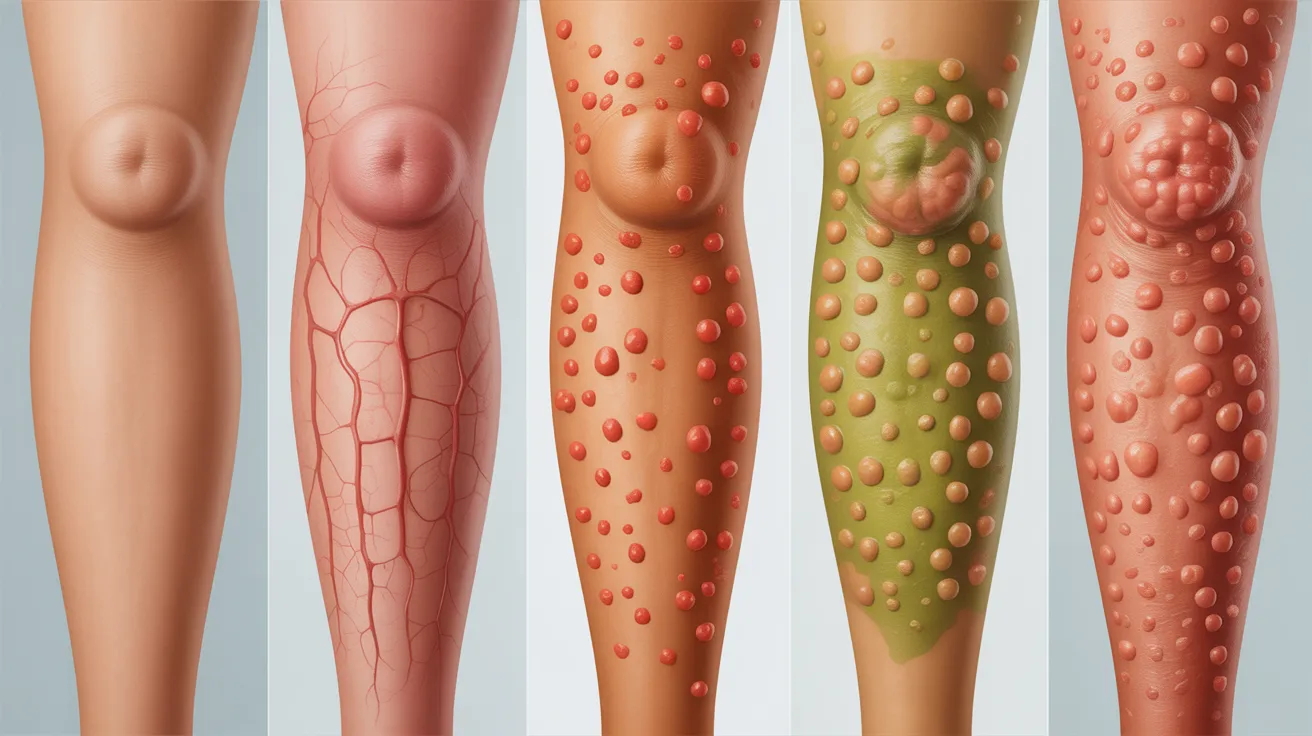
Early-stage appearance (0–24 hours)
In the earliest stage, poison ivy can be subtle and easy to miss.
Common early signs include:
- Mild redness
- Slight swelling
- Warm or tight skin
- Tingling or itching without a visible rash
At this point, the skin may look similar to:
- Mild sun irritation
- A light allergic reaction
- Dry or sensitive skin
⚠️ Important: Washing the area within 10–30 minutes can sometimes prevent a full rash from developing.
Classic Poison Ivy Rash Appearance (24–72 Hours)
As the reaction develops, poison ivy becomes more recognizable.
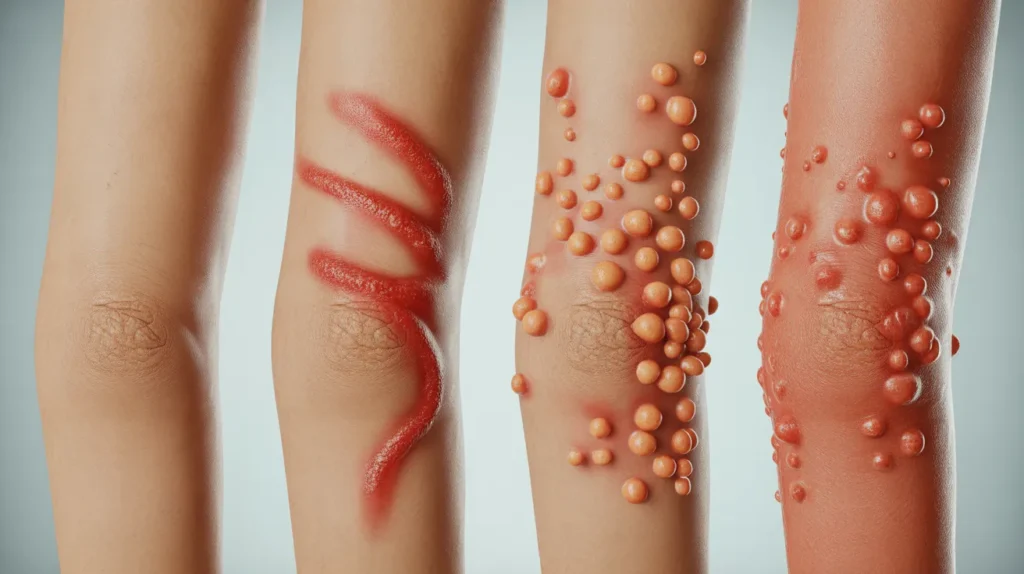
Hallmark visual features
- Red, inflamed patches
- Clusters or lines of bumps
- Raised or swollen skin
- Intense itching
One of the most distinctive features is the linear pattern.
Why does poison ivy form lines?
- The plant brushes against skin
- Oil transfers in streaks
- Scratching spreads urushiol to nearby areas
This often creates long, straight or zigzag lines on:
- Arms
- Legs
- Neck
- Ankles
- Wrists
Blisters and Fluid-Filled Bumps
What poison ivy blisters look like
As the rash worsens, small bumps may turn into clear, fluid-filled blisters.
Typical blister traits:
- Thin, fragile skin
- Clear or pale yellow fluid
- Grouped in clusters
- Very itchy or burning
🧠 Myth alert:
The fluid inside blisters does not spread poison ivy. Spread only happens from urushiol oil, not blister fluid.
Severe Poison Ivy Reactions on Skin
In sensitive individuals or after heavy exposure, poison ivy can look dramatic.
Signs of a severe reaction
- Large, oozing blisters
- Extensive swelling
- Thick crusting
- Skin cracking or weeping
- Rash covering large body areas
High-risk areas include:
- Face
- Eyes
- Lips
- Genitals
🚨 Seek medical care if swelling affects breathing, vision, or causes intense pain.
How Poison Ivy Rash Changes Over Time
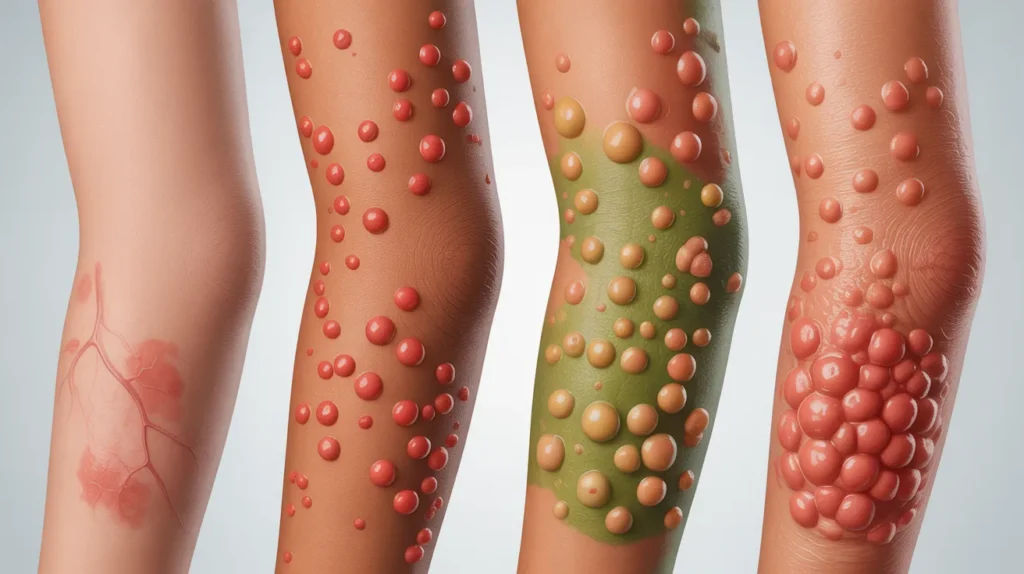
Poison ivy doesn’t look the same from start to finish. It evolves in stages.
Day-by-day progression
Days 1–2
- Redness and itching
- Small bumps
Days 3–5
- Blisters form
- Itching intensifies
Days 6–10
- Blisters dry or burst
- Skin crusts or flakes
Days 10–21
- Rash fades
- Skin may appear pink or darker
- Mild peeling or dryness remains
Healing time varies based on:
- Exposure amount
- Skin sensitivity
- Treatment used
Common Areas Where Poison Ivy Appears on the Body
Poison ivy shows up most often on exposed skin.
Typical locations
- Forearms and hands
- Legs and ankles
- Neck and collarbone
- Face (especially cheeks)
- Waistline
- Behind knees
Areas covered by tight clothing may trap urushiol, leading to worse reactions.
What Poison Ivy Does Not Look Like
Understanding what poison ivy isn’t can prevent misdiagnosis.
Usually NOT poison ivy if:
- Rash is symmetrical on both sides
- No itching is present
- Rash is scaly without blisters
- Appears immediately after exposure
- Looks like ring-shaped lesions
These features may suggest eczema, fungal infections, hives, or heat rash instead.
Poison Ivy vs Similar Skin Conditions
Poison Ivy vs Eczema
| Feature | Poison Ivy | Eczema |
|---|---|---|
| Cause | Plant oil | Chronic skin condition |
| Pattern | Linear | Patchy |
| Blisters | Common | Rare |
| Duration | Temporary | Recurring |
Poison Ivy vs Bug Bites
- Bug bites are round
- Often have a central puncture
- Rarely form lines
- Usually less blistering
How Poison Ivy Feels on the Skin
The sensation is often worse than the appearance.
Common sensations
- Intense itching
- Burning
- Tightness
- Throbbing
- Sensitivity to touch
Scratching increases inflammation and can lead to infection.
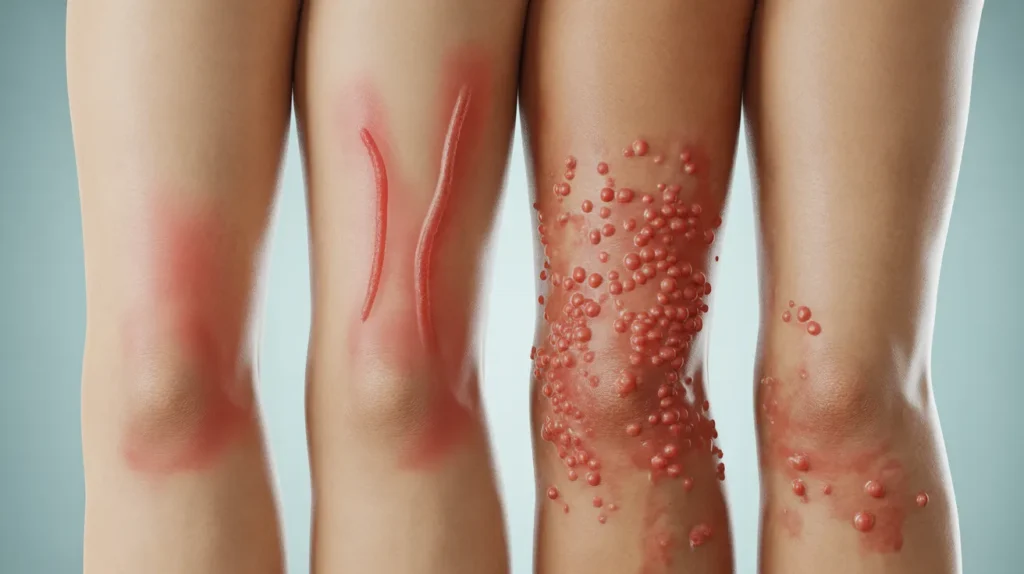
Visual Cues to Identify Poison Ivy Rash Quickly
Look for these key visual clues:
- ✔️ Red streaks or lines
- ✔️ Clusters of tiny blisters
- ✔️ Swelling around rash edges
- ✔️ Uneven, irregular shapes
- ✔️ Delayed onset after outdoor activity
If you notice these signs after hiking, gardening, or yard work, poison ivy is likely.
Where What Does Poison Ivy Look Like on Your Skin Can Be Found or Live
Although poison ivy itself is a plant, understanding where it lives helps explain where and how the rash appears on your skin.
Natural environments
- Forest edges
- Wooded trails
- Fields and meadows
- Riverbanks
- Roadsides
Around homes
- Fences
- Sheds
- Garden borders
- Under decks
- Along walls
On animals and objects
Urushiol sticks to:
- Pet fur
- Clothing
- Shoes
- Gardening tools
- Camping gear
You can get poison ivy without seeing the plant, simply by touching contaminated surfaces.
What to Do When Poison Ivy Appears on Your Skin
Immediate steps (first few hours)
- Wash skin with soap and cool water
- Clean under fingernails
- Remove contaminated clothing
- Rinse exposed gear
Ongoing skin care
- Use calamine lotion
- Apply cool compresses
- Take oatmeal baths
- Use hydrocortisone cream
❌ Avoid:
- Scratching
- Popping blisters
- Hot showers
- Home remedies like bleach or vinegar
When to See a Doctor
Seek medical advice if:
- Rash covers face or genitals
- Blisters are large or infected
- Symptoms last over 3 weeks
- Swelling becomes severe
- Fever develops
Doctors may prescribe:
- Oral steroids
- Prescription creams
- Antihistamines
Long-Term Skin Effects After Poison Ivy
Most people heal fully, but temporary changes may occur.
Possible after-effects
- Darkened skin (hyperpigmentation)
- Pink or sensitive patches
- Mild scarring (rare)
- Dryness or peeling
Proper care reduces lingering marks.
Prevention Tips for Future Exposure
- Learn to identify poison ivy plants
- Wear long sleeves outdoors
- Wash pets after hikes
- Clean tools and shoes
- Use barrier creams
- Avoid burning brush (smoke carries urushiol)
Frequently Asked Questions (FAQ)
1. What does poison ivy look like on your skin compared to an allergic rash?
Poison ivy usually appears in lines or streaks, with blisters and intense itching, unlike general allergic rashes which are often symmetrical.
2. Can poison ivy rash spread on your skin?
It may appear to spread, but this is due to delayed reactions or repeated contact—not blister fluid.
3. How long does poison ivy stay visible on the skin?
Most rashes last 1–3 weeks, depending on severity and treatment.
4. Does everyone get the same poison ivy rash?
No. Some people develop mild redness, while others experience severe blistering and swelling.