

A Detailed, Skin-Care Guide for Identifying, Treating, and Preventing Razor Burn
Razor burn is one of those skin issues that almost everyone experiences at least once, yet many people aren’t entirely sure what it actually looks like—or how to tell it apart from other skin problems like razor bumps, acne, or allergic reactions.
If you’ve ever finished shaving only to notice redness, stinging, or itchy patches afterward, you’ve likely encountered razor burn. While usually harmless, razor burn can be uncomfortable, unsightly, and frustrating—especially if it keeps coming back.
This guide explains exactly what razor burn looks like, how it feels, where it appears, why it happens, and what you can do to calm and prevent it. Think of this as a “skin first-aid manual,” written with the same clarity and reassurance you’d expect from a trusted care guide.
What Is Razor Burn?
Razor burn is a form of skin irritation caused by friction, pressure, or damage to the outer layer of the skin during shaving. It occurs when a razor scrapes not just hair, but also the sensitive surface cells of the skin.
Unlike infections or long-term skin conditions, razor burn is usually temporary. However, repeated irritation can lead to more severe problems if left untreated.
Key Characteristics of Razor Burn
- Appears shortly after shaving
- Often feels hot, itchy, or stingy
- Usually fades within hours to a few days
- Can occur anywhere hair is shaved
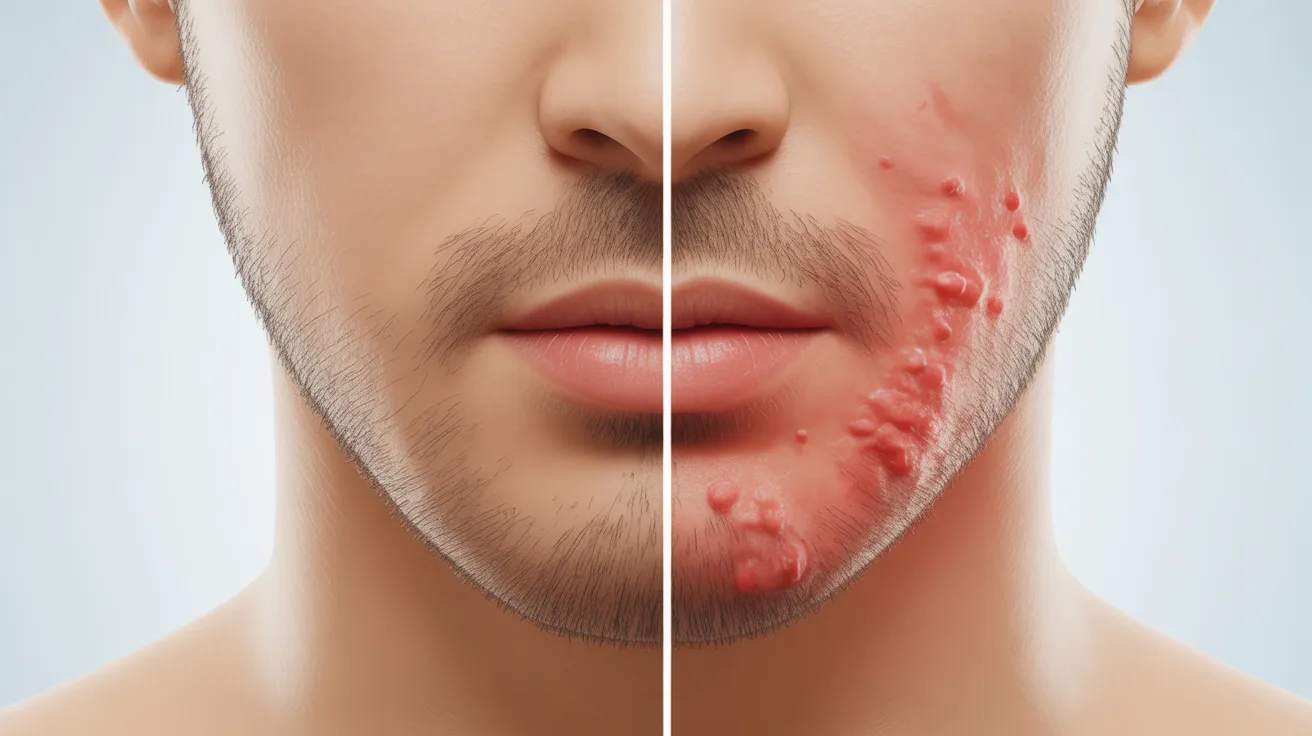
What Does Razor Burn Look Like?
Razor burn has a distinct visual appearance, though it can vary depending on skin tone, shaving method, and sensitivity level.
Common Visual Signs of Razor Burn
Razor burn often appears as:
- Red or pink patches on the skin
- Blotchy or uneven redness
- Small red dots clustered together
- Mild swelling or puffiness
- Shiny or tight-looking skin
- Dry, flaky, or peeling areas
In people with darker skin tones, razor burn may appear:
- Darker than the surrounding skin
- Purplish or grayish in color
- Slightly raised without obvious redness
Early vs. Severe Razor Burn
Mild Razor Burn
- Light redness
- Slight itching or tingling
- Skin feels warm but intact
Moderate Razor Burn
- Noticeable redness
- Burning or stinging sensation
- Skin may feel tender to touch
Severe Razor Burn
- Intense redness or discoloration
- Swelling
- Tiny fluid-filled bumps
- Pain or persistent itching
How Razor Burn Feels (Sensory Clues)
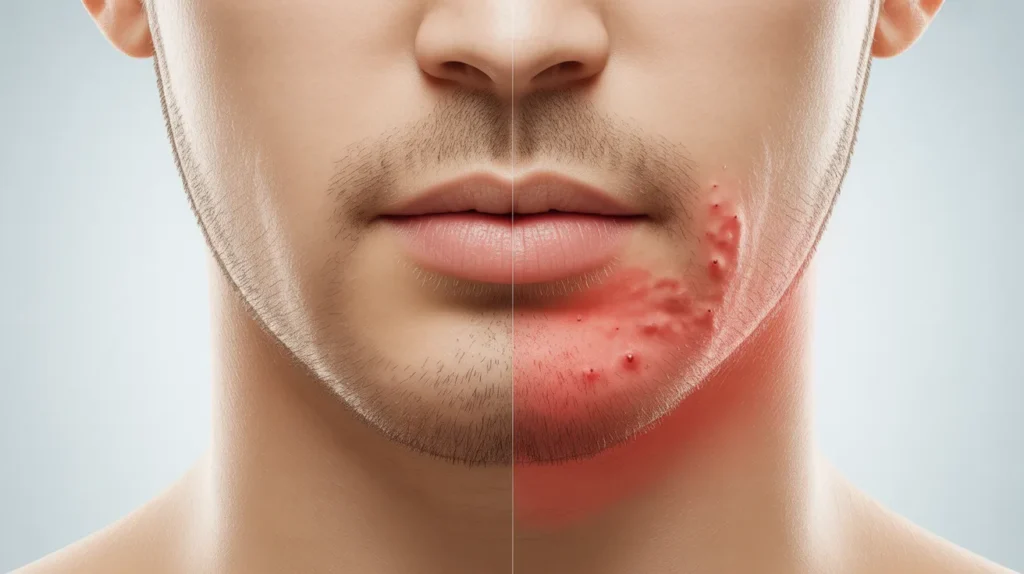
Visual signs are important, but how razor burn feels can help confirm what you’re dealing with.
Common sensations include:
- Burning or stinging
- Itching
- Tightness
- Tenderness
- Warmth in the affected area
These sensations typically worsen:
- Right after shaving
- When sweating
- When clothing rubs the area
Razor Burn vs. Razor Bumps: Know the Difference
Razor burn is often confused with razor bumps, but they are not the same.
Razor Burn
- Flat or slightly raised redness
- Appears immediately or within hours
- Caused by surface irritation
Razor Bumps (Ingrown Hairs)
- Small, raised bumps
- May contain pus
- Appear days later
- Caused by hair curling back into skin
Quick tip:
If the skin looks irritated but flat → likely razor burn
If you see distinct bumps → likely razor bumps
Where Razor Burn Commonly Appears
Razor burn can occur anywhere shaving happens, but some areas are more vulnerable due to friction and sensitivity.
Most Common Areas
- Face and neck
- Underarms
- Legs
- Bikini line
- Pubic area
- Chest
- Inner thighs
Sensitive zones with thinner skin or frequent movement are especially prone.
Where Razor Burn Can Be Found or Live
While razor burn isn’t a living organism, it does have preferred “habitats”—areas and environments where it is more likely to develop.
Typical Environments for Razor Burn
Razor burn commonly “lives” in:
- Warm, moist areas (underarms, groin)
- High-friction zones (inner thighs, neck)
- Areas shaved frequently
- Skin exposed to sweat or tight clothing
Host Factors That Encourage Razor Burn
- Sensitive skin
- Dry or dehydrated skin
- Curly or coarse hair
- Lack of protective shaving products
In short, razor burn thrives where skin is stressed, unprotected, and repeatedly disturbed.
What Causes Razor Burn?
Understanding the cause helps prevent it.
Primary Causes
- Dull razor blades
- Shaving without lubrication
- Pressing too hard
- Shaving against hair growth
- Multiple passes over the same area
Contributing Factors
- Dry skin
- Harsh soaps
- Alcohol-based aftershaves
- Tight clothing after shaving
- Shaving too frequently
Visual Cues to Identify Razor Burn
If you’re unsure what you’re seeing, look for these visual clues:
- Redness that follows razor strokes
- Irritation limited to shaved areas
- Smooth skin surface without pus
- Fading redness over time
If the area worsens or develops pus, crusting, or spreading redness, it may be something else.
How Long Does Razor Burn Last?
Razor burn typically lasts:
- A few hours for mild cases
- 1–3 days for moderate irritation
- Up to a week if severe or repeatedly irritated
Proper care can significantly shorten healing time.
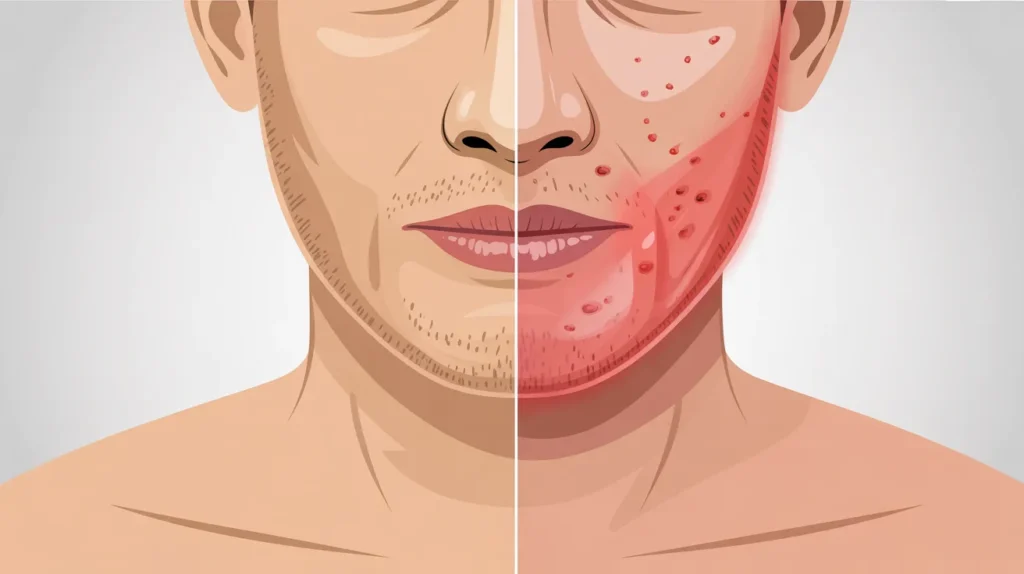
How to Soothe Razor Burn (Immediate Care)
Right After Shaving
- Rinse with cool water
- Gently pat dry (don’t rub)
- Apply a soothing, fragrance-free moisturizer
Helpful Ingredients to Look For
- Aloe vera
- Oat extract
- Chamomile
- Shea butter
- Ceramides
What to Avoid
- Alcohol-based products
- Scrubs or exfoliants
- Hot showers
- Tight clothing
Preventing Razor Burn: Practical Tips
Before Shaving
- Wash skin with warm water
- Use a clean, sharp razor
- Apply shaving cream or gel
During Shaving
- Shave in the direction of hair growth
- Use light pressure
- Avoid repeated passes
After Shaving
- Cool the skin
- Moisturize immediately
- Let skin “breathe”
Who Is Most Prone to Razor Burn?
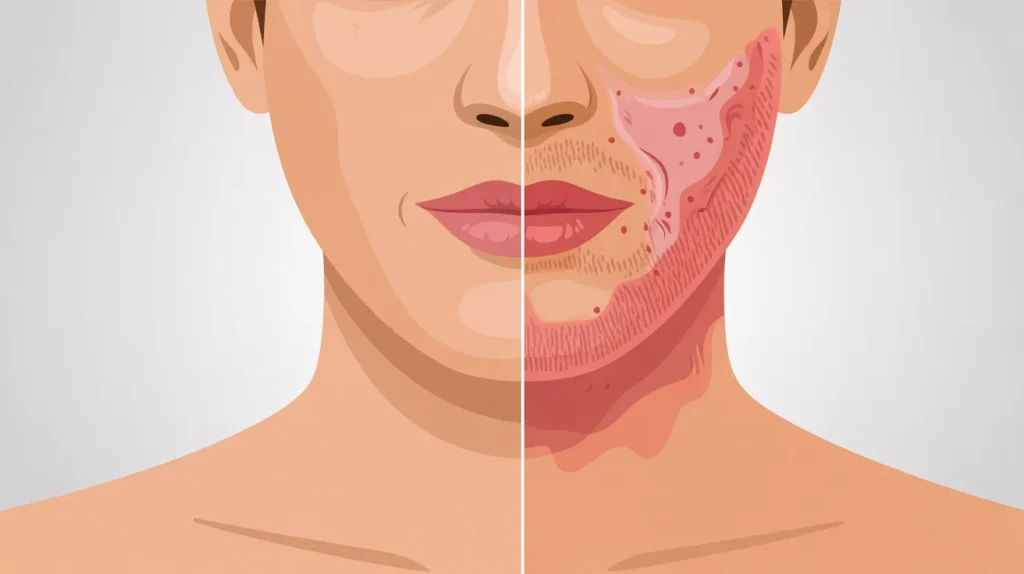
Certain people are more likely to experience razor burn.
Higher-Risk Groups
- People with sensitive skin
- Those with curly hair
- Individuals who shave daily
- Anyone using dull or old razors
When Razor Burn Might Be Something Else
Seek professional advice if you notice:
- Persistent pain
- Spreading redness
- Fever
- Pus or crusting
- Darkening scars
These may indicate infection or another skin condition.
Frequently Asked Questions (FAQ)
1. What does razor burn look like right after shaving?
Razor burn usually appears as red, irritated patches or dots shortly after shaving. The skin may look inflamed and feel warm or stingy.
2. How can I tell if it’s razor burn or an allergic reaction?
Razor burn is limited to shaved areas and fades with time. Allergic reactions often spread, itch intensely, or cause hives.
3. Can razor burn turn into razor bumps?
Yes. Repeated irritation can lead to ingrown hairs, especially if hair curls back into the skin.
Final Thoughts
Razor burn is common, manageable, and preventable. Knowing what it looks like, how it feels, and where it appears gives you the power to act early and care for your skin properly. With gentle techniques and the right products, your skin can stay smooth, calm, and healthy—even if shaving is part of your routine.