

A Complete Guide to the Meaning, Uses, and Real-World Applications of RICE
Introduction: Why “RICE” Means More Than Just Food
The word rice instantly brings to mind a staple food enjoyed by billions of people worldwide. But in many professional, medical, educational, and technical contexts, RICE is not food at all—it’s an acronym.
If you’ve ever seen RICE written in capital letters and wondered what it stands for, you’re not alone. This short, simple acronym appears in:
- First-aid and sports medicine
- Technology and computer science
- Education and testing
- Business, finance, and economics
- Law enforcement and government documentation
Just like a veterinarian’s guide helps pet owners understand symptoms, treatments, and environments, this article will walk you through what RICE stands for, how it’s used, when it applies, and how to recognize its meaning in different situations.
By the end of this guide, you’ll know:
- All major meanings of RICE
- How to identify which meaning applies
- Practical tips for using or understanding RICE correctly
- Common mistakes and misconceptions
- Where each type of RICE can be “found or live”
What Does RICE Stand For? (Quick Overview)
RICE is an acronym with multiple meanings, depending on the context.
Here are the most common ones:
| Field | RICE Stands For |
|---|---|
| Medical / First Aid | Rest, Ice, Compression, Elevation |
| Computer Science | Remote Infrastructure for Computer Experiments |
| Education / Testing | Research in Common Education |
| Business / Economics | Return on Invested Capital (ROIC variant) |
| Law Enforcement | Racketeer Influenced and Corrupt Organizations (commonly confused but related) |
| Engineering / Energy | Rice University (institutional use) |
⚠️ Important Visual Cue
- Lowercase “rice” usually refers to food
- Uppercase “RICE” almost always signals an acronym
The Most Common Meaning: RICE in First Aid and Medicine
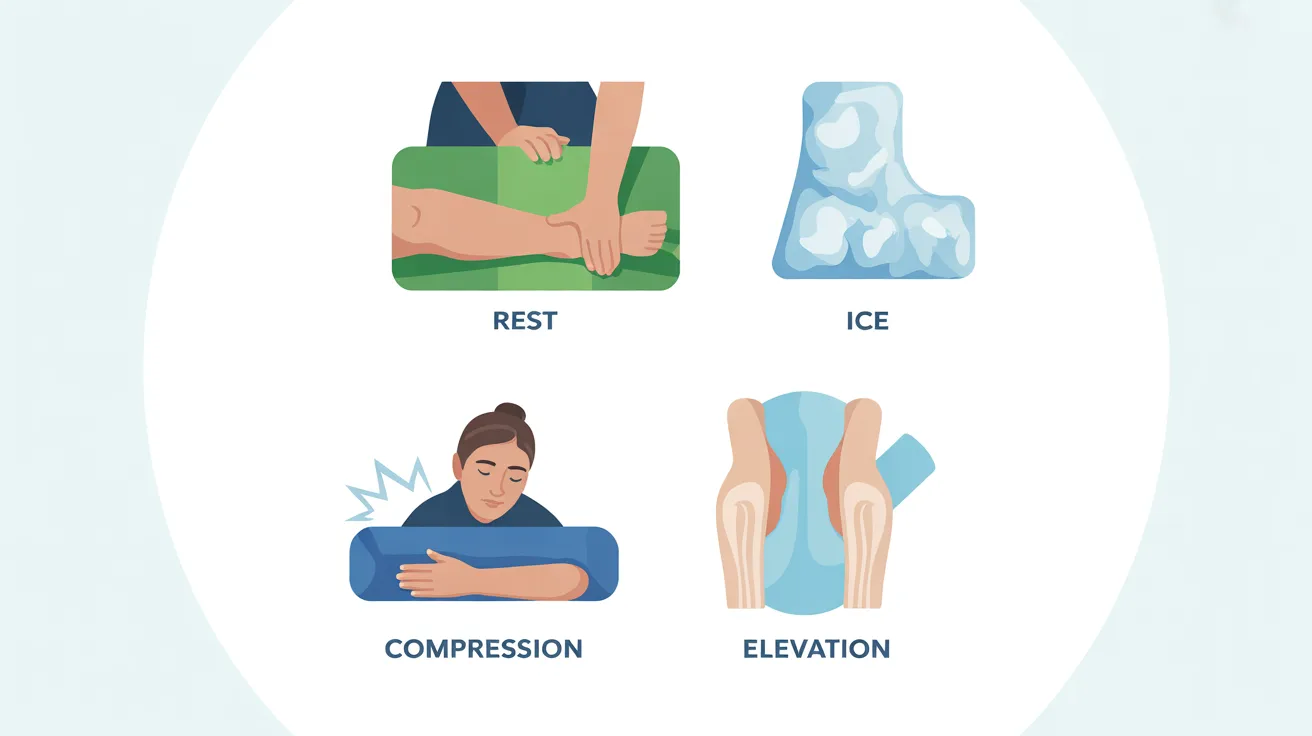
RICE = Rest, Ice, Compression, Elevation
This is by far the most widely recognized and used meaning of RICE.
In first aid, RICE is a treatment method for soft-tissue injuries, especially:
- Sprains
- Strains
- Bruises
- Minor muscle injuries
- Swollen joints
Think of it like a basic care plan—similar to how a vet might prescribe rest and observation for a mildly injured pet.
Breaking Down Each Part of Medical RICE
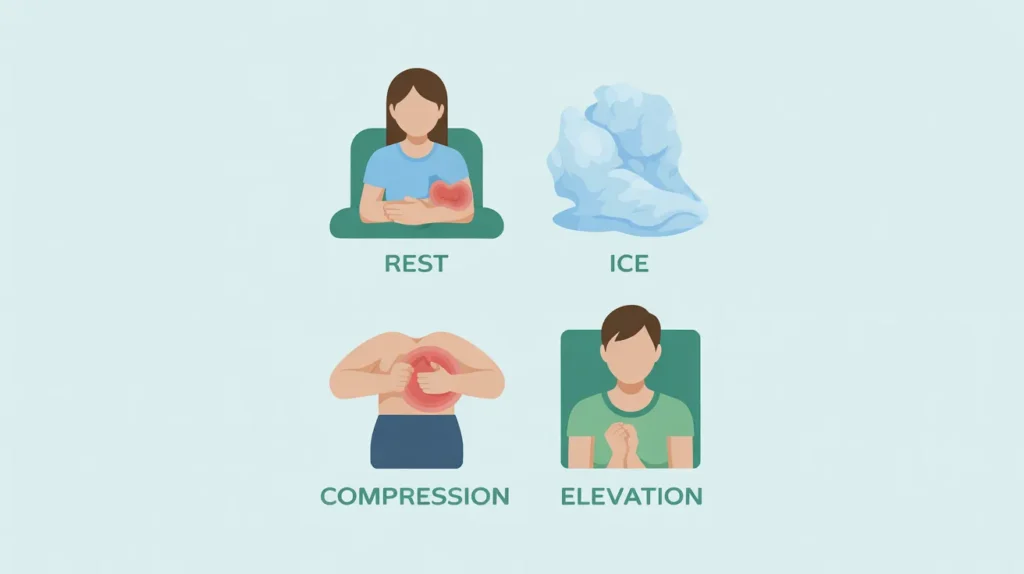
1. Rest
What it means:
Stop using the injured area to prevent further damage.
Why it matters:
Continuing activity can worsen inflammation, increase swelling, and delay healing.
Practical tips:
- Avoid weight-bearing if the injury affects a leg or foot
- Use braces or splints if recommended
- Short-term rest (24–72 hours) is usually sufficient
Visual cues:
- Limping
- Guarding an arm or joint
- Avoidance of movement
2. Ice
What it means:
Apply cold to reduce swelling and pain.
How to apply safely:
- Use ice packs or frozen vegetables
- Wrap in a cloth (never place ice directly on skin)
- Apply for 15–20 minutes, every 2–3 hours
Symptoms that benefit from icing:
- Swelling
- Throbbing pain
- Warm or red skin
3. Compression
What it means:
Apply gentle pressure using bandages or wraps.
Why it helps:
- Limits swelling
- Provides joint support
- Encourages circulation
Tips for safe compression:
- Bandage should be snug, not tight
- Remove if numbness or discoloration occurs
- Rewrap daily
Visual cues of improper compression:
- Blue or pale skin
- Tingling or numbness
- Increased pain
4. Elevation
What it means:
Raise the injured area above heart level.
Why it works:
Gravity helps reduce fluid buildup and swelling.
Best practices:
- Use pillows while resting
- Elevate for several hours per day
- Combine with ice for best results
When Should You Use Medical RICE?
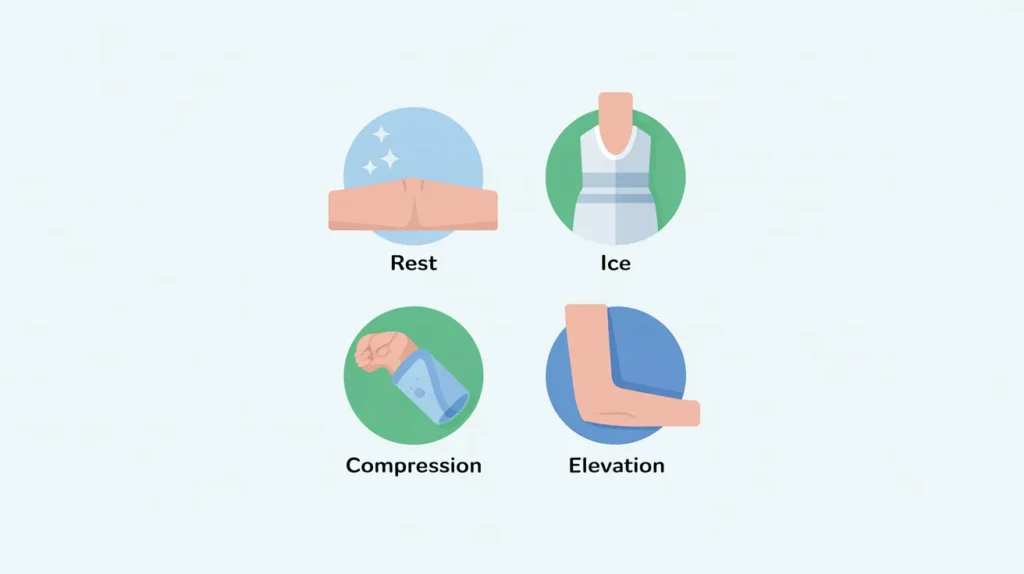
RICE is most effective within the first 24–72 hours after an injury.
Good candidates for RICE:
- Ankle sprains
- Wrist strains
- Knee swelling
- Minor sports injuries
When NOT to rely on RICE alone:
- Severe pain
- Visible deformity
- Inability to move or bear weight
- Symptoms lasting more than 3–5 days
In these cases, professional medical care is recommended.
Modern Updates: Is RICE Still Recommended?
While RICE remains widely used, some professionals now suggest modified approaches, such as:
- POLICE (Protection, Optimal Loading, Ice, Compression, Elevation)
- PEACE & LOVE protocols
However, RICE is still considered:
- Safe
- Easy
- Effective for minor injuries
- Ideal for immediate care
RICE in Computer Science and Technology
RICE = Remote Infrastructure for Computer Experiments
In technical and academic environments, RICE may refer to Remote Infrastructure for Computer Experiments, especially in research and networking.
What does this mean?
It allows researchers and students to:
- Run experiments remotely
- Test networks and systems
- Share computing resources
Common users:
- Universities
- Research labs
- Software developers
- Networking engineers
Visual and Contextual Clues for Tech-Based RICE
You’re likely dealing with technical RICE if you see terms like:
- Servers
- Virtual machines
- Cloud infrastructure
- Networking protocols
- Academic papers
RICE in Education and Testing
RICE = Research in Common Education
In educational settings, RICE may appear in:
- Curriculum studies
- Assessment research
- Policy discussions
It focuses on:
- Learning outcomes
- Teaching effectiveness
- Standardized education research
RICE in Business and Economics
RICE as a Financial Acronym
In business, RICE may be used as shorthand for investment evaluation models or metrics related to capital efficiency.
Typical contexts include:
- ROI discussions
- Corporate finance reports
- Economic forecasting
While not as standardized as medical RICE, it appears in professional documentation.
Common Confusions: RICE vs Rice
| Term | Meaning |
|---|---|
| rice | Edible grain |
| RICE | Acronym |
| Rice University | Educational institution |
| Rice syndrome | Not an official medical term |
⚠️ Tip: Always check capitalization and context.
Where RICE Can Be Found or Live
While RICE isn’t a living organism, its “habitats” depend on its meaning.
Medical RICE Is Found In:
- First-aid manuals
- Sports medicine clinics
- Emergency rooms
- Athletic training rooms
- Home injury-care kits
Technology RICE Is Found In:
- University research labs
- Data centers
- Cloud platforms
- Computer science publications
Educational RICE Is Found In:
- Academic journals
- School policy reports
- Education conferences
Business RICE Is Found In:
- Financial models
- Corporate presentations
- Investment analysis tools
Practical Tips for Identifying the Correct Meaning of RICE
Think like a diagnostic checklist:
- Is someone injured? → Medical RICE
- Are computers or servers mentioned? → Tech RICE
- Is the discussion academic or educational? → Education RICE
- Are finances involved? → Business RICE
Symptoms That Suggest You’re Dealing with Medical RICE
Much like identifying symptoms in pets or people, context matters.
Likely medical RICE if you notice:
- Pain
- Swelling
- Bruising
- Limited movement
- Recent injury
Visual Cues to Look For
- Ice packs
- Elastic bandages
- Elevated limbs
- Athletic injuries
- First-aid posters
Common Mistakes People Make With RICE
- Icing too long (risk of skin damage)
- Compressing too tightly
- Using RICE for severe injuries
- Assuming RICE works forever without improvement
Frequently Asked Questions (FAQ)
1. What does RICE most commonly stand for?
Most commonly, RICE stands for Rest, Ice, Compression, and Elevation, a first-aid treatment for soft-tissue injuries.
2. Is RICE still recommended by doctors?
Yes, especially for minor injuries. Some professionals now combine RICE with gentle movement after the initial rest period.
3. How do I know which meaning of RICE applies?
Look at the context:
- Injury → medical
- Computers → technical
- Schools → educational
- Finance → business
4. Can RICE be used on children or senior people?
Yes, but with caution. Always monitor skin sensitivity and circulation, and consult a healthcare professional if unsure.
Final Thoughts: Understanding RICE the Right Way
Just like medical terms can mean very different things depending on the species, symptoms, and setting, RICE changes meaning based on context.
Whether you’re:
- Treating a sprained ankle
- Reading a research paper
- Analyzing financial data
Understanding what RICE stands for helps you respond correctly, avoid mistakes, and apply the right solution at the right time