


Toenail fungus is one of those conditions that often starts quietly and slowly, almost unnoticed—until one day you look down and realize your toenail doesn’t look quite right anymore. The color seems off. The nail looks thicker than usual. Maybe it’s crumbly at the edges or oddly shaped.
If you’ve ever wondered what toenail fungus actually looks like, you’re not alone. Many people confuse it with bruising, aging nails, or damage from tight shoes. Understanding its visual signs early can help you take action before the infection worsens.
In this detailed guide, we’ll explore what toenail fungus looks like at every stage, what symptoms often accompany it, how it differs from other nail problems, and when you should seek treatment. Think of this as a calm, reassuring inspection guide—similar to how a vet or pet-care professional would help you recognize a health issue early.
What Is Toenail Fungus?
Toenail fungus, medically known as onychomycosis, is a fungal infection that affects one or more toenails. It occurs when microscopic fungi invade the nail or the skin beneath it, feeding on keratin—the protein that makes up nails.
These fungi thrive in warm, moist environments and can enter through tiny cracks in the nail or surrounding skin.
Common Types of Fungi Involved
- Dermatophytes (most common cause)
- Yeasts (such as Candida)
- Non-dermatophyte molds
Each type can cause slightly different visual changes, but many signs overlap.
Why Appearance Matters in Toenail Fungus
Toenail fungus isn’t just a cosmetic issue. The way it looks can tell you:
- How advanced the infection is
- Whether it’s likely fungal or something else
- How urgently treatment may be needed
Early identification often means easier, faster treatment—much like spotting a skin issue early in pets before it spreads.
What Does Toenail Fungus Look Like in the Early Stages?
In the beginning, toenail fungus can be subtle. Many people miss these early signs or dismiss them as normal wear and tear.
Early Visual Signs
- A small white, yellow, or pale spot at the edge or tip of the nail
- Slight cloudiness or dullness
- Nail loses its natural shine
- Very mild discoloration that doesn’t wash off
Texture Changes
- Nail may feel slightly rough
- No major thickening yet
- Nail still mostly intact and smooth
At this stage, the nail often doesn’t hurt, which is why people delay treatment.
What Does Toenail Fungus Look Like as It Progresses?
As the fungus spreads deeper under the nail, the changes become more noticeable and harder to ignore.
Common Mid-Stage Visual Changes
- Yellow, brown, or gray discoloration
- Nail becomes thicker than normal
- Uneven surface or ridges
- Nail edges may appear jagged or crumbly
Structural Changes
- Nail begins to lift slightly from the nail bed
- Debris builds up underneath the nail
- Nail shape becomes distorted
This is often when people realize something is wrong.
Advanced Toenail Fungus: What It Looks Like When Severe
If left untreated, toenail fungus can become severe and significantly alter the nail’s appearance.
Severe Visual Signs
- Nail turns dark yellow, brown, or black
- Nail becomes very thick and hard
- Brittle, cracked, or split nail
- Nail may partially or completely detach
Additional Symptoms
- Pain when walking or wearing shoes
- Pressure discomfort
- Foul odor coming from under the nail
- Inflammation of surrounding skin
At this stage, treatment is usually more intensive and slower.
Common Colors Seen in Toenail Fungus (And What They Mean)
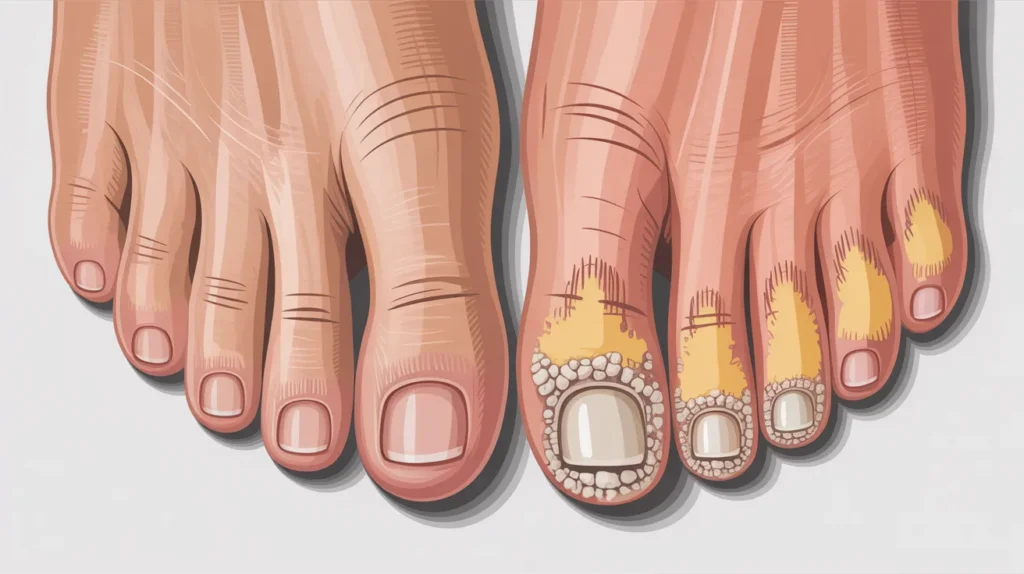
Color changes are one of the most helpful visual clues.
Yellow Toenails
- Most common fungal sign
- Indicates keratin breakdown
- Often starts at the tip
White Toenails
- May appear chalky or powdery
- Often linked to superficial fungal infection
- Can flake off easily
Brown or Gray Nails
- Suggest deeper fungal involvement
- Often accompanied by thickening
Black Toenails
- Can indicate advanced infection
- Must be evaluated to rule out injury or melanoma
Texture Changes: How Toenail Fungus Feels and Looks
Toenail fungus doesn’t just change color—it changes texture too.
Typical Texture Changes
- Thickened nail
- Rough or uneven surface
- Brittle edges
- Crumbly material when trimmed
Under-Nail Appearance
- Yellow or white debris
- Powdery or cheesy buildup
- Nail lifting away from the bed
These texture changes often make nail care difficult.
What Does Toenail Fungus Look Like Compared to Healthy Nails?
Understanding the difference can help you identify a problem early.
Healthy Toenails
- Clear or pale pink
- Smooth surface
- Even thickness
- Firm but flexible
Fungal Toenails
- Discolored
- Thick or misshapen
- Brittle or crumbly
- Dull and opaque
The contrast becomes more dramatic over time.
Toenail Fungus vs Other Nail Conditions
Toenail fungus is often mistaken for other issues.
Bruised Toenail
- Dark red or purple
- Usually caused by injury
- Color grows out with nail
Nail Psoriasis
- Pitting on nail surface
- Yellow-brown patches
- Often affects fingernails too
Aging Nails
- Mild thickening
- Slight yellowing
- No crumbling or debris
If in doubt, a medical professional can confirm the cause.
Does Toenail Fungus Look the Same on All Toes?
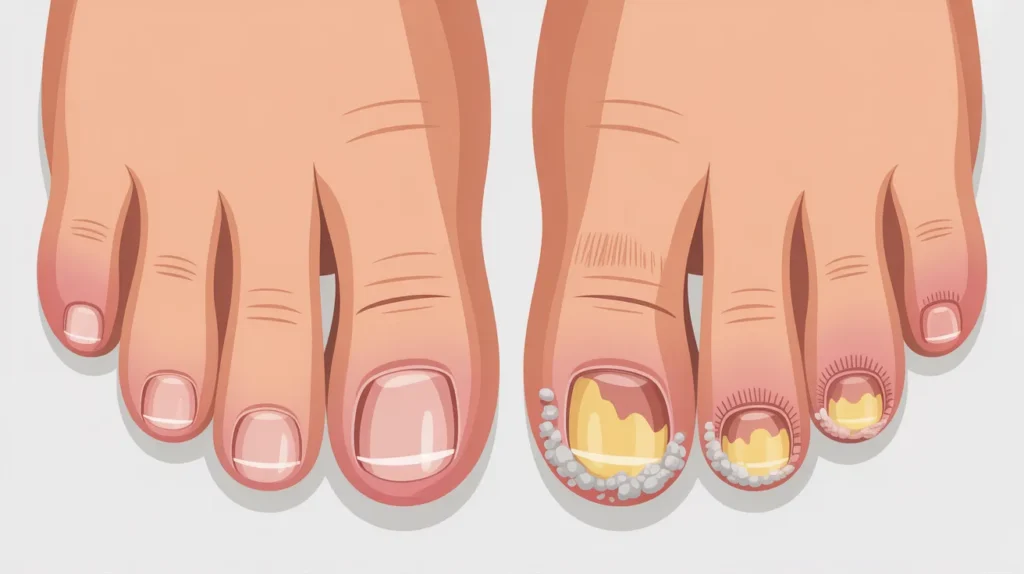
No. Some toes are more commonly affected than others.
Most Commonly Affected
- Big toe
- Little toe
Why These Toes?
- More pressure from shoes
- Higher risk of trauma
- Reduced airflow
Each nail may show different stages of infection at the same time.
Can Toenail Fungus Affect Fingernails?
Yes, though it’s less common.
Fingernail Fungus Appearance
- White or yellow discoloration
- Brittle nails
- Thickening (less dramatic than toes)
Toenail fungus is more common because feet are often warm and moist.
What Does Toenail Fungus Look Like Under a Microscope? (Simplified)
While you can’t see this at home, it helps to understand what’s happening.
- Fungi grow in branching patterns
- They digest keratin
- Cause nail structure breakdown
This explains why nails become thick and crumbly.
Where Toenail Fungus Can Be Found or Live
Toenail fungus doesn’t come from nowhere—it thrives in specific environments.
Common Environments
- Public showers
- Locker rooms
- Swimming pools
- Gym floors
Ideal Conditions for Fungi
- Warmth
- Moisture
- Darkness
Hosts and Carriers
- Human skin and nails
- Contaminated footwear
- Nail tools
Walking barefoot in damp areas increases exposure risk.
Visual Clues That Toenail Fungus Is Spreading
Watch for:
- Infection moving from one nail to another
- Increasing thickness over time
- Nail separation worsening
- Skin around nail becoming scaly
Early action can prevent spread.
When Should You Be Concerned About Appearance?
Seek medical advice if:
- Nail becomes painful
- Nail turns black
- Nail detaches
- Infection spreads quickly
- You have diabetes or poor circulation
Certain conditions make complications more likely.
Practical Tips for Monitoring Toenail Appearance
- Check nails monthly
- Use good lighting
- Trim nails straight across
- Photograph changes over time
Think of it like routine health checks.
Can Toenail Fungus Go Away on Its Own?
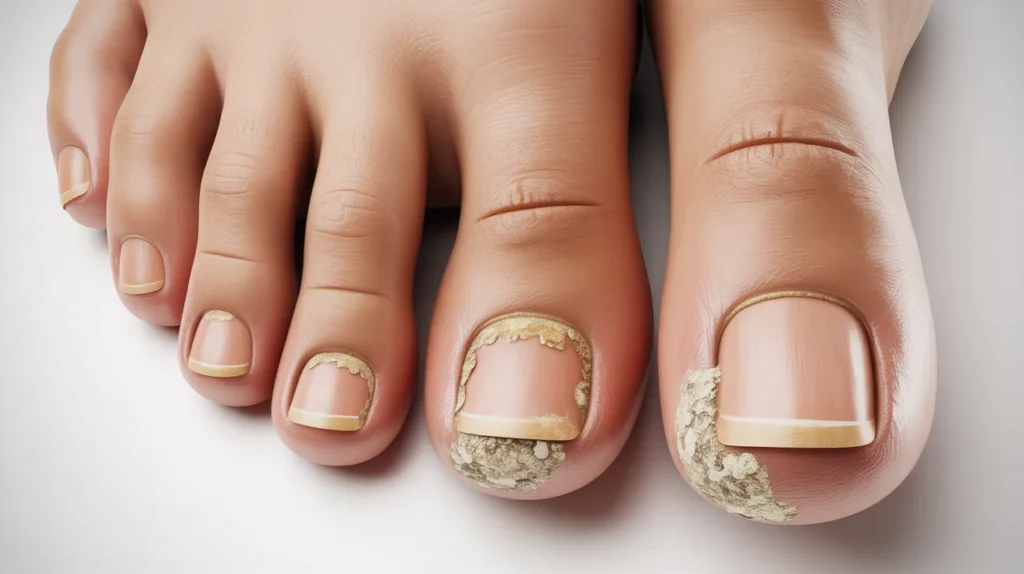
Visually, it rarely improves without treatment.
- May stay the same
- Usually worsens slowly
- Rare spontaneous improvement
Appearance typically does not normalize without intervention.
How Long Does It Take for Toenails to Look Normal Again?
Even after treatment:
- Toenails grow slowly
- Full regrowth may take 9–18 months
- Visual improvement happens gradually
Patience is key.
Preventing Toenail Fungus Recurrence
Healthy-looking nails can become reinfected.
Prevention Tips
- Keep feet dry
- Change socks daily
- Disinfect nail tools
- Avoid tight shoes
- Wear sandals in public showers
Prevention protects appearance long-term.
Frequently Asked Questions (FAQ)
1. What does mild toenail fungus look like?
Mild toenail fungus usually appears as a small white or yellow spot at the nail tip with minimal thickening.
2. Can toenail fungus look like dirt under the nail?
Yes. Debris buildup under the nail can resemble trapped dirt but does not wash away.
3. Is thick toenail always fungus?
Not always. Aging, injury, or medical conditions can also thicken nails.
4. Does toenail fungus always smell?
No. Odor typically appears in advanced cases.
Key Takeaway
Toenail fungus changes nails in color, thickness, texture, and shape. What starts as a tiny spot can gradually become a thick, discolored, brittle nail if ignored. Learning what toenail fungus looks like empowers you to act early—protecting not just the look of your nails, but their health too.